Una vita leggendariaA legendary lifeEin legendäres Leben
Illustratore italo-tedescoItalo-German illustratorDeutsch-italienischer IllustratorSonderführer Z · AfrikakorpsPartigiano combattenteCombatant partisanPartisan und Kämpfer
Kurt Caesar
Montigny-lès-Metz, 1908 — Bracciano, 1974
All'anagrafe Kurt Kaiser · sei nomi, sette lingue, una vitaBorn Kurt Kaiser · six names, seven languages, one lifeGeboren als Kurt Kaiser · sechs Namen, sieben Sprachen, ein Leben
Dal Polo Nord all'Afrikakorps. Dal carcere dei Miogni di Varese alle copertine di Urania. La vita leggendaria di un uomo che attraversò il Novecento. Una storia vera che sembra la sceneggiatura di un film mai girato.From the North Pole to the Afrikakorps. From the Miogni prison to the covers of Urania. The legendary life of a man who crossed the twentieth century. A true story that reads like the screenplay of a film never shot.Vom Nordpol zum Afrikakorps. Vom Miogni-Gefängnis in Varese zu den Titelbildern von Urania. Das legendäre Leben eines Mannes, der durch das 20. Jahrhundert ging. Eine wahre Geschichte wie das Drehbuch eines nie gedrehten Films.
174
Copertine Urania
Urania covers
Urania-Titelbilder
90–107
Disegni Afrikakorps
Afrikakorps drawings
Afrikakorps-Zeichnungen
6
Pseudonimi
Pseudonyms
Pseudonyme
11
Mesi partigiano
Months partisan
Monate als Partisan
Scorri per leggereScroll to readZum Lesen scrollen
I
§ I
La VitaThe LifeDas Leben
Nacque Kurt Kaiser nella Lorena tedesca. Morì Caesar a Bracciano. In mezzo: sette lingue, sei nomi, cinque guerre, una vita.He was born Kurt Kaiser in German Lorraine. He died Caesar in Bracciano. In between: seven languages, six names, five wars, one life.Geboren wurde er als Kurt Kaiser im deutschen Lothringen. Gestorben ist er als Caesar in Bracciano. Dazwischen: sieben Sprachen, sechs Namen, fünf Kriege, ein Leben.
Quando nacque Kurt Kaiser, il 30 marzo 1908 a Montigny-lès-Metz, in Lorena, il padre Giulio Felice gli annotò sull'atto di battesimo un'ascendenza che chiunque l'avesse letta avrebbe scambiato per leggenda. I conti di Burtenbach: stirpe italiana giunta a Vienna al seguito di Napoleone, mutato il cognome Corti in Caesar, dispersi tra la Mosella e la Boemia. Crebbe in quella foschia genealogica come in un romanzo: con un padre tedesco che lo voleva chirurgo, e una vocazione che lo trasse altrove — alle accademie di Berlino, Monaco, Königsberg, Lipsia.
When Kurt Kaiser was born, on 30 March 1908 in Montigny-lès-Metz, Lorraine, his father Giulio Felice inscribed on the baptismal record a lineage anyone reading it might have mistaken for legend. The Counts of Burtenbach: an Italian line that had reached Vienna with Napoleon, changed the surname Corti to Caesar, scattered between the Moselle and Bohemia. He grew up in that genealogical haze as if in a novel: with a German father who wanted him to be a surgeon, and a vocation that drew him elsewhere — to the academies of Berlin, Munich, Königsberg, Leipzig.
Als Kurt Kaiser am 30. März 1908 in Montigny-lès-Metz in Lothringen geboren wurde, trug sein Vater Giulio Felice in die Taufurkunde eine Abstammung ein, die jeder für eine Legende gehalten hätte. Die Grafen von Burtenbach: ein italienisches Geschlecht, das mit Napoleon nach Wien gelangt war, den Namen Corti in Caesar wandelte und sich zwischen Mosel und Böhmen verstreute. Er wuchs in diesem genealogischen Nebel auf wie in einem Roman: mit einem deutschen Vater, der ihn zum Chirurgen machen wollte, und einer Berufung, die ihn anderswohin zog — an die Akademien von Berlin, München, Königsberg und Leipzig.
Fig. 01 — Kurt Caesar al lavoro, fotografia, anni Cinquanta. Mancino, fumava due pacchetti di sigarette al giorno, dipingeva una copertina di Urania in un giorno e mezzo.Fig. 01 — Kurt Caesar at work, photograph, 1950s. Left-handed, smoked two packs a day, painted an Urania cover in a day and a half.Abb. 01 — Kurt Caesar bei der Arbeit, Fotografie, 1950er Jahre. Linkshänder, rauchte zwei Schachteln Zigaretten am Tag, malte ein Urania-Titelbild in anderthalb Tagen.Fig. — Will Sparrow, il pirata del cielo. Una tavola della saga nell'edizione francese (Feux Croisés): i fuorilegge Will Sparrow e Mark Park ai lavori forzati in una miniera d'uranio presso il Polo Sud. Il personaggio è una creazione di Kurt Caesar (1937); la firma «van Straelen» di alcune ristampe francesi è di attribuzione discussa tra gli storici del fumetto.Fig. — Will Sparrow, the sky pirate. A page of the saga in its French edition (Feux Croisés): the outlaws Will Sparrow and Mark Park at forced labour in a uranium mine near the South Pole. The character was created by Kurt Caesar (1937); the «van Straelen» signature on some French reprints is debated among comics historians.Abb. — Will Sparrow, der Himmelspirat. Eine Tafel der Saga in der französischen Ausgabe (Feux Croisés): die Gesetzlosen Will Sparrow und Mark Park bei der Zwangsarbeit in einer Uranmine nahe dem Südpol. Die Figur schuf Kurt Caesar (1937); die Signatur „van Straelen“ einiger französischer Nachdrucke ist unter Comic-Historikern umstritten.
A vent'anni era già tutto quello che un personaggio dovrebbe essere: pugile professionista con titolo tedesco di categoria, canottiere, pilota brevettato, parlava sette lingue. Secondo il saggio di Daniela Franchetti salì sul dirigibile Italia di Umberto Nobile come inviato dello Sphere di Londra e tornò dal Polo Nord nel 1928 — episodio tramandato dai suoi profili biografici, ma che i ruolini ufficiali dell'equipaggio non confermano. L'anno seguente le Sturmabteilungen diedero alle fiamme la casa editrice del suocero — Elfriede Ensle, l'intellettuale marxista che aveva sposato a Berlino, fuggì in fretta in Svizzera. Caesar la raggiunse in Italia. Dei nazisti tedeschi, per il momento, ne aveva visti abbastanza.
IIL'invenzione del fumetto italiano
Arrivò a Milano nei primi anni Trenta col passaporto di un sopravvissuto e un portfolio che, per fortuna, somigliava a quello di Alex Raymond. Mondadori lo accolse: nel 1935 la sua prima tavola in italiano, Il prigioniero, già con quella precisione tecnica che diventerà la sua firma. Nel 1936 le prime copertine dei Gialli sotto lo pseudonimo J. Away — sarebbe stato il nome, raccontava, di un pugile inglese da lui sconfitto. Ne avrebbe usati molti altri: Jack Away, Cesare Avai, Caesar Away, Corrado Caesar. Disegnava come si entra ed esce da una cantina chiusa a chiave: sempre con una scappatoia.
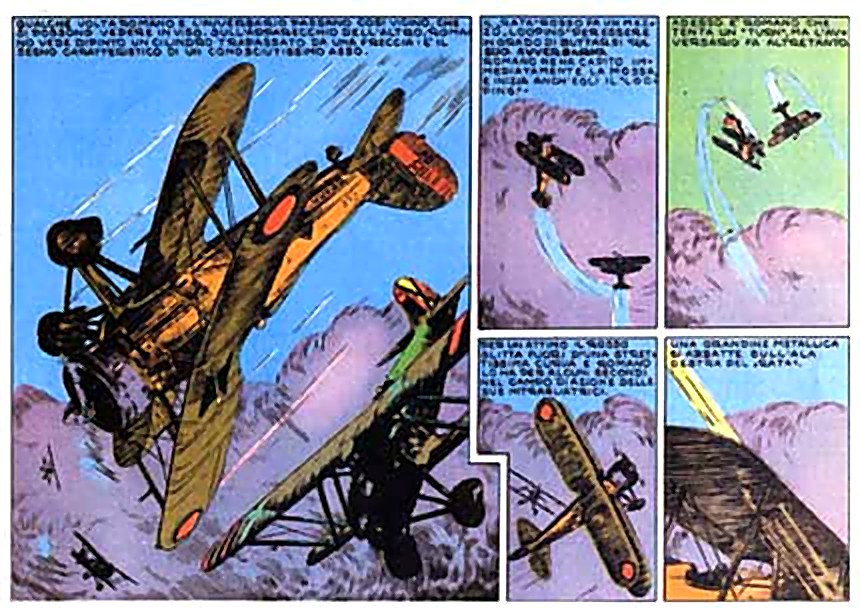
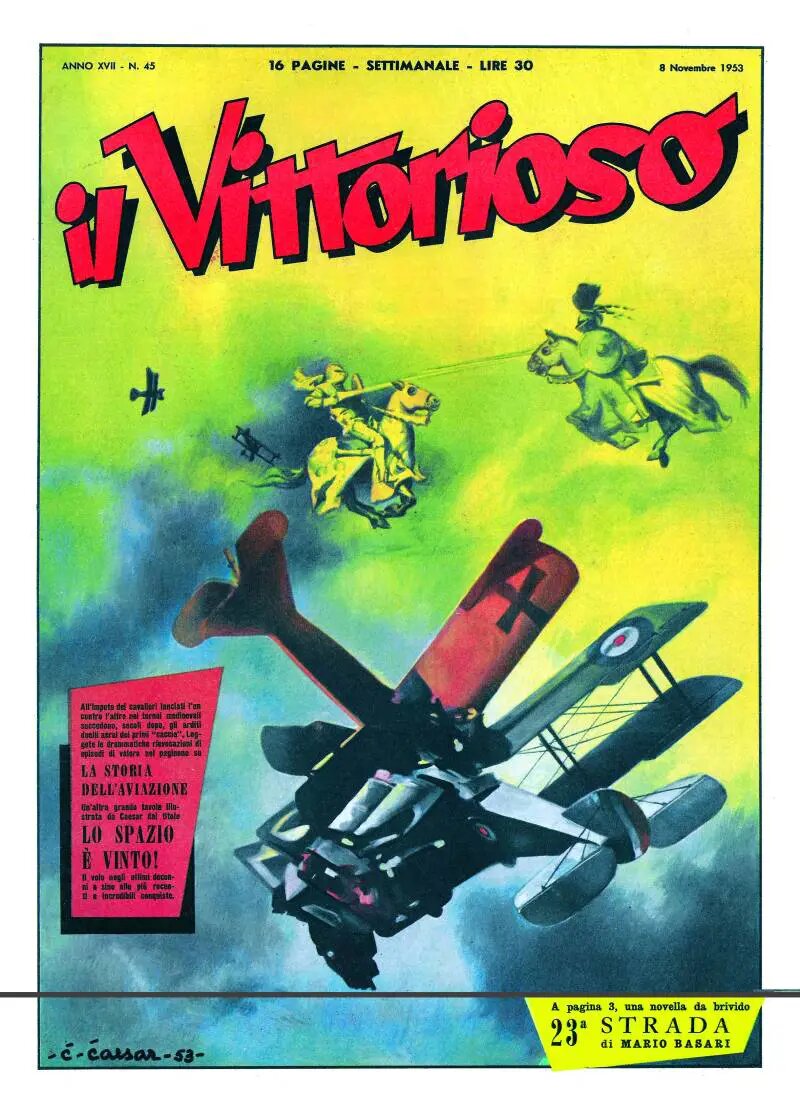
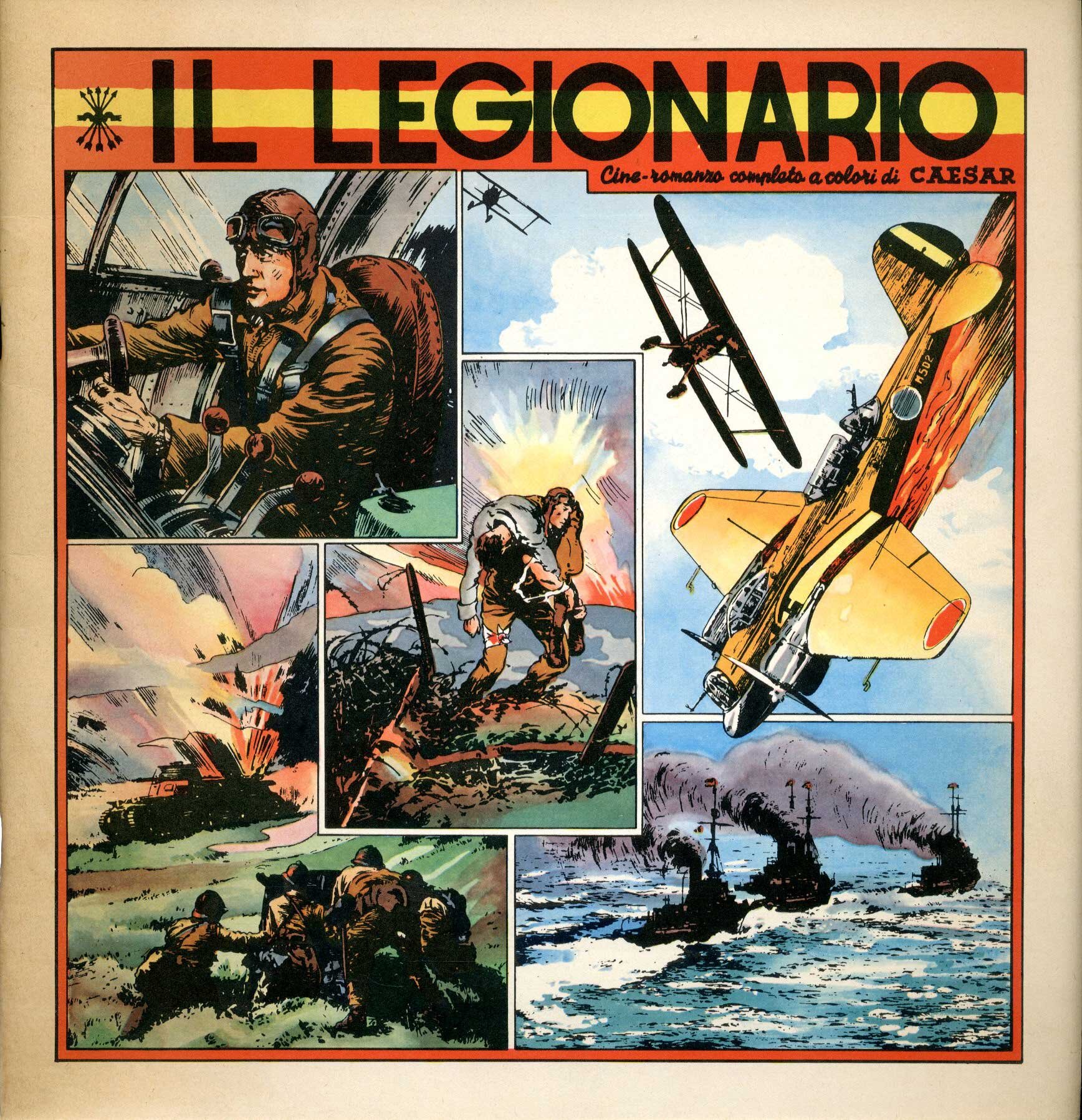
Nel 1937 inventò Will Sparrow, il pirata del cielo: un aviatore americano rinnegato, primo "eroe negativo" del fumetto italiano, già esportato in Inghilterra. Poi venne Il Vittorioso, settimanale cattolico dell'A.V.E., e nel 1938 esplose Romano il Legionario: dieci cineromanzi fino al 1943, eroe della Guerra civile spagnola, del Tibet, dell'Atlantico, dei deserti africani. Claudio Carabba lo avrebbe poi spiegato così: «proprio l'irrefrenabile passione per ogni tipo di ordigni costituisce in compenso un utile freno. Tutt'intento a disegnare macchine, Caesar si dimentica di fare propaganda».
IIIIl Sonderführer di Rommel
By twenty he was already everything a character ought to be: a professional boxer with a German weight-category title, a rower, a licensed pilot, fluent in seven languages. According to Daniela Franchetti's essay he boarded Umberto Nobile's airship Italia as a London Sphere correspondent and returned from the North Pole in 1928 — an episode handed down by his biographical profiles, though the expedition's official crew lists do not confirm it. The following year the Sturmabteilungen burned down his father-in-law's publishing house — Elfriede Ensle, the Marxist intellectual he had married in Berlin, fled at once to Switzerland. Caesar joined her in Italy. Of German Nazis, for the moment, he had seen enough.
IIThe invention of Italian comics
He arrived in Milan in the early 1930s with the passport of a survivor and a portfolio that, fortunately, looked like Alex Raymond's. Mondadori took him in: in 1935 his first Italian plate, The Prisoner, already with that technical precision that would become his signature. In 1936 the first covers for the Gialli series under the pseudonym J. Away. He would use many more: Jack Away, Cesare Avai, Caesar Away, Corrado Caesar. He drew like one enters and exits a locked cellar: always with an escape route.
In 1937 he invented Will Sparrow, the Sky Pirate: a renegade American aviator, the first "negative hero" of Italian comics, already exported to England. Then came Il Vittorioso, the Catholic weekly published by A.V.E., and in 1938 Romano il Legionario exploded: ten cine-novels until 1943, hero of the Spanish Civil War, of Tibet, of the Atlantic, of the African deserts. Claudio Carabba would put it this way: «his irrepressible passion for every kind of contraption serves, in compensation, as a useful brake. So intent on drawing machines, Caesar forgets to do propaganda».
IIIRommel's Sonderführer
Mit zwanzig war er bereits alles, was eine Romanfigur sein sollte: Berufsboxer mit deutschem Gewichtsklassentitel, Ruderer, lizenzierter Pilot, sprach sieben Sprachen. Laut dem Essay von Daniela Franchetti bestieg er Umberto Nobiles Luftschiff Italia als Korrespondent des Londoner Sphere und kehrte 1928 vom Nordpol zurück — eine von seinen biografischen Profilen überlieferte Episode, die die offiziellen Besatzungslisten der Expedition allerdings nicht bestätigen. Im Jahr darauf brannten die Sturmabteilungen den Verlag seines Schwiegervaters nieder — Elfriede Ensle, die marxistische Intellektuelle, die er in Berlin geheiratet hatte, floh eilig in die Schweiz. Caesar folgte ihr nach Italien. Von deutschen Nationalsozialisten hatte er vorerst genug gesehen.
IIDie Erfindung des italienischen Comics
Anfang der 1930er Jahre kam er nach Mailand, mit dem Pass eines Überlebenden und einem Portfolio, das glücklicherweise dem von Alex Raymond ähnelte. Mondadori nahm ihn auf: 1935 seine erste italienische Tafel, Der Gefangene, schon mit jener technischen Präzision, die zu seiner Handschrift wurde. 1936 die ersten Titelbilder der Gialli unter dem Pseudonym J. Away. Viele weitere sollten folgen: Jack Away, Cesare Avai, Caesar Away, Corrado Caesar. Er zeichnete, wie man einen verschlossenen Keller betritt und verlässt: stets mit einem Fluchtweg.
1937 erfand er Will Sparrow, den Himmelspiraten: einen abtrünnigen amerikanischen Flieger, den ersten „negativen Helden“ des italienischen Comics, schon früh nach England exportiert. Dann kam Il Vittorioso, das katholische Wochenblatt der A.V.E., und 1938 explodierte Romano il Legionario: zehn Bildromane bis 1943, Held des Spanischen Bürgerkriegs, Tibets, des Atlantiks, der afrikanischen Wüsten. Claudio Carabba erklärte es später so: «gerade die unbändige Leidenschaft für jede Art von Gerät wirkt als nützliche Bremse. So vertieft ins Zeichnen von Maschinen, vergisst Caesar, Propaganda zu machen».
IIIRommels Sonderführer
Fig. 02 — Erwin Rommel ritratto da Kurt Caesar (1941). Caesar, interprete del feldmaresciallo in Nord Africa, ne fissò il volto a carboncino per il volume Marsch und Kampf des deutschen Afrikakorps (Carl Röhrig Verlag, Monaco, 1943), che si apriva con la prefazione autografa di Rommel.Fig. 02 — Erwin Rommel drawn by Kurt Caesar (1941). Caesar, the field marshal's interpreter in North Africa, captured his face in charcoal for the volume Marsch und Kampf des deutschen Afrikakorps (Carl Röhrig Verlag, Munich, 1943), which opened with Rommel's handwritten preface.Abb. 02 — Erwin Rommel, gezeichnet von Kurt Caesar (1941). Caesar, Dolmetscher des Feldmarschalls in Nordafrika, hielt sein Gesicht in Kohle fest für den Band Marsch und Kampf des deutschen Afrikakorps (Carl Röhrig Verlag, München, 1943), der mit Rommels handschriftlichem Vorwort begann.
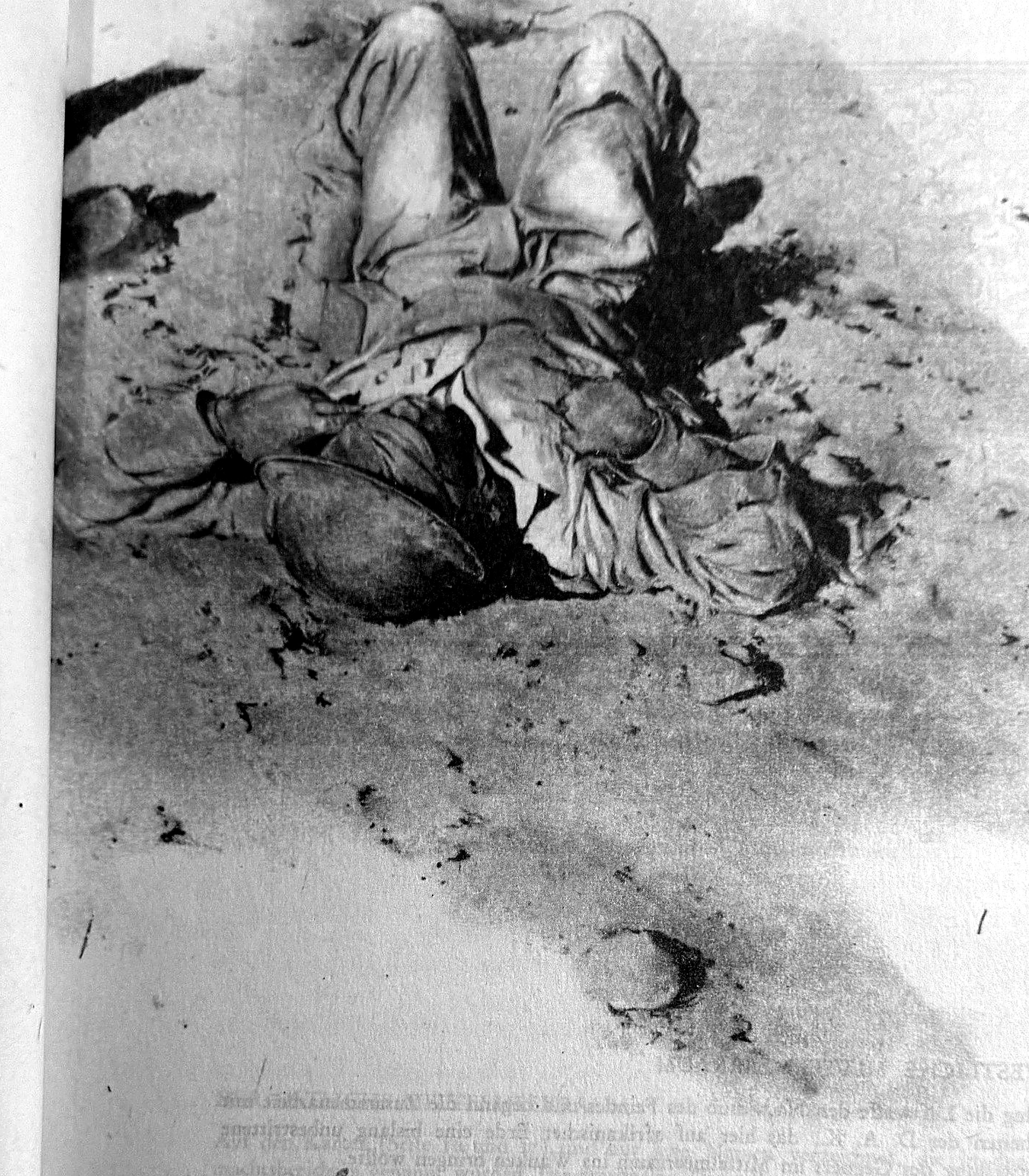
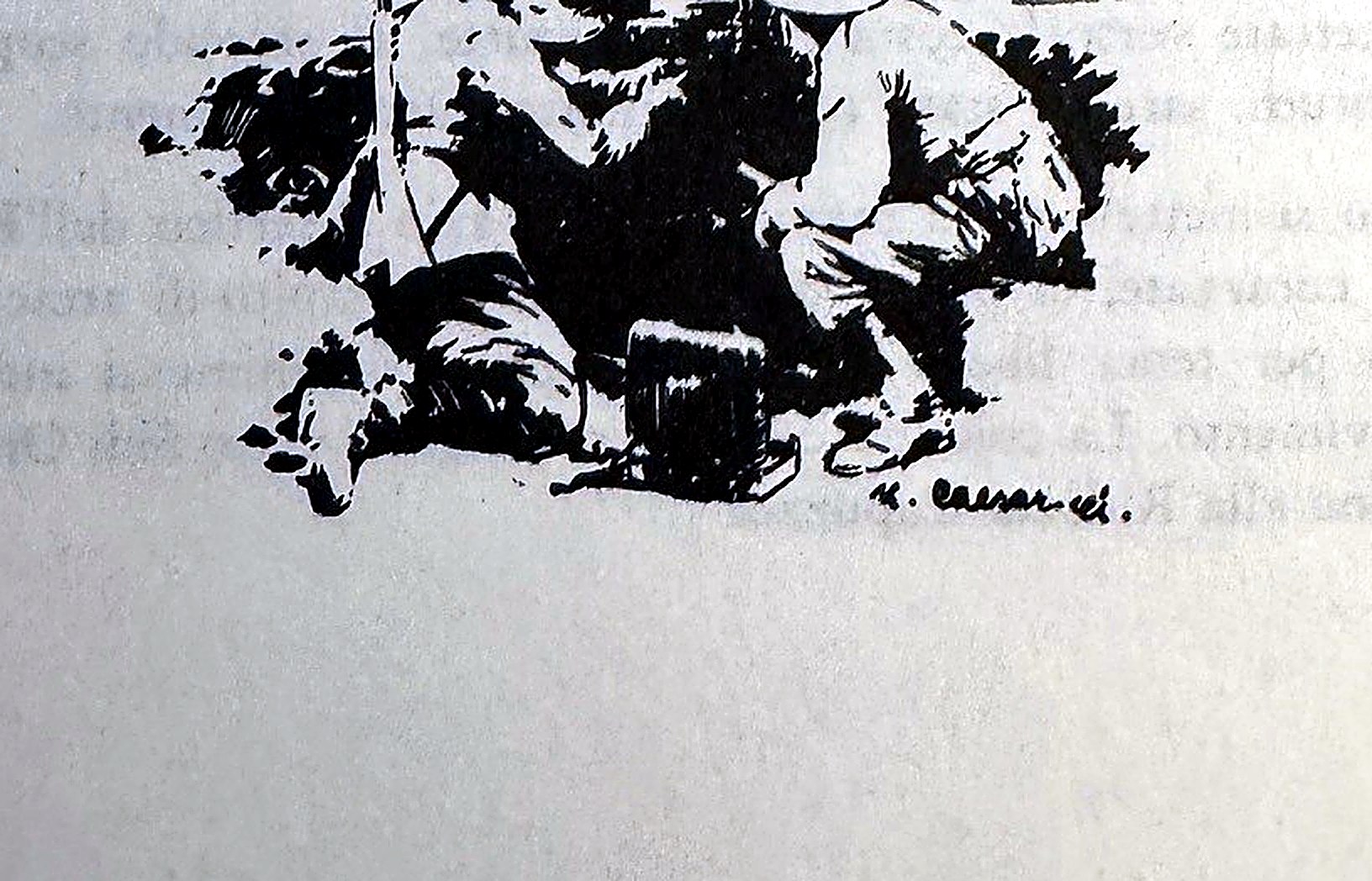
Tentò di sottrarsi alla guerra: chiese, ostinato, la cittadinanza italiana — una pratica che restò sospesa fino alla cartolina della Wehrmacht. Lo spedirono in Nord Africa come Sonderführer Z, ufficiale specialista in propaganda. Interprete di Erwin Rommel, illustratore al fronte, autore unico di un volume bilingue commissionato dal Generalkommando del DAK: Marsch und Kampf des deutschen Afrikakorps – Band I – 1941, Carl Röhrig Verlag, Monaco, 1943. Duecentoquattordici pagine, disegni a carboncino realizzati con la sabbia ancora nelle scarpe: novanta secondo alcune fonti, centosette secondo il saggio di Daniela Franchetti (1996). Aveva poco più di trent'anni e disegnava carri armati come fossero animali addomesticati. Il secondo volume, previsto per il 1942, non vide mai la luce. Fu ferito. Lo catturarono gli inglesi.
IVIl partigiano tedesco
Tornò in Italia nel 1943, destinato al Comando tedesco di Verona. Era ufficiale del Reich, marito di una marxista, italiano per scelta e per amore. Il gappista Ottavio Premazzi "Fiorenzo" lo avvicinò nel Varesotto. La villa di Caesar a Venegono Superiore divenne — improvvisamente, come una camera oscura si trasforma in cella di un cospiratore — luogo d'incontro dei comandi della 121ª Brigata d'Assalto Garibaldi "Walter Marcobi". Tessere annonarie, armi, viveri, falsi documenti. Una mattina di fine novembre del 1944, in divisa tedesca impeccabile, si presentò al carcere dei Miogni di Varese con una requisitoria del Tribunale Speciale di Verona perfettamente contraffatta. Portò via il sedicenne Angelo Chiesa. Poi Antonio Cetin "Libero". Poi Alessio Leggi "Ivan".
VLe copertine che reinventarono il futuro
La Liberazione lo trovò a Venegono. Gli inglesi lo arrestarono comunque — un ufficiale tedesco è un ufficiale tedesco — e per mesi lo tennero in carcere, malgrado le attestazioni dei partigiani. Quando uscì, il dopoguerra fu durissimo: dal 1945 al 1947 fu privato del lavoro editoriale, e per sopravvivere la Federazione del PCI di Varese gli erogò cinquemila lire al mese. Nel 1948 la Commissione Regionale Lombardia lo riconobbe ufficialmente partigiano combattente: undici mesi accreditati, pratica 22 VA, medaglia d'argento.
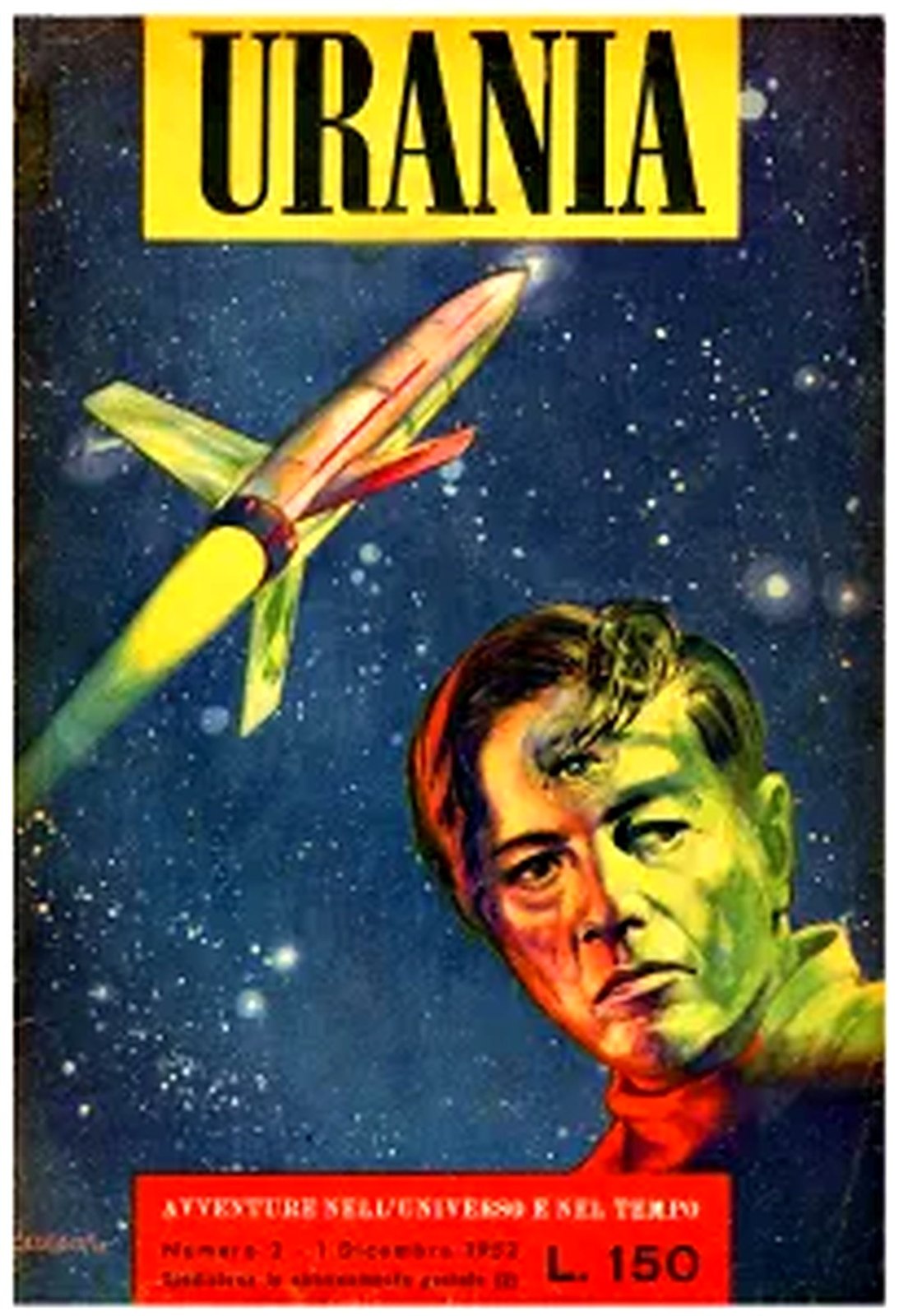
Poi, nel 1952, qualcuno chiamò Mondadori. Giorgio Monicelli — fratello di Mario, traduttore, geniale inventore di parole — cercava un copertinista per la sua collana di fantascienza. Sapeva chi avrebbe potuto rendere credibile l'invisibile: quel disegnatore che, già tecnico alla fabbrica di aeroplani Caproni, sapeva dare un'anima a ogni motore. Centosettantaquattro copertine di Urania, dal primo numero del 1952, una al mese o quasi, fino al 1959 — quando, trasferitosi nel Lazio dopo la lunga malattia e la morte della moglie Elfriede, che lo lasciarono nella rovina economica, fu sostituito da Carlo Jacono. Continuò per gli editori romani (Oltre il Cielo, Cronache del Futuro) e negli anni Sessanta per la Fleetway britannica e la tedesca Moewig, di cui fu il principale disegnatore di Perry Rhodan im Bild — la più antica serie a fumetti del Perryverso, ventisette albi dal 1967 al 1968. Morì a Bracciano il 12 luglio 1974, "quasi dimenticato dalle stesse istituzioni" — scriverà Angelo Chiesa nel 2003 — "se non per il convegno del 1998 indetto dall'Amministrazione di Venegono Superiore. E per la vita salvata ad alcuni di noi".
He tried to dodge the war: he obstinately applied for Italian citizenship — a procedure that hung suspended until the Wehrmacht summons came. They sent him to North Africa as Sonderführer Z, a specialist propaganda officer. Erwin Rommel's interpreter, illustrator at the front, sole author of a bilingual volume commissioned by the DAK General Command: Marsch und Kampf des deutschen Afrikakorps – Band I – 1941, Carl Röhrig Verlag, Munich, 1943. Two hundred and fourteen pages, charcoal drawings made with the sand still in his boots: ninety by some accounts, one hundred and seven according to Daniela Franchetti's essay (1996). He was just past thirty and drew tanks like domesticated animals. The second volume, planned for 1942, never appeared. He was wounded. The British captured him.
IVThe German partisan
He returned to Italy in 1943 assigned to the German Command of Verona. He was an officer of the Reich, husband of a Marxist, Italian by choice and by love. The partisan Ottavio Premazzi "Fiorenzo" approached him in the Varese countryside. Caesar's villa at Venegono Superiore suddenly became a meeting place for the commands of the 121st Garibaldi Assault Brigade "Walter Marcobi". Ration cards, weapons, supplies, forged documents. One morning in late November 1944, in an impeccable German uniform, he showed up at the Miogni prison in Varese with a perfectly forged transfer order to Verona's Special Tribunal. He took away the sixteen-year-old Angelo Chiesa. Then Antonio Cetin "Libero". Then Alessio Leggi "Ivan".
VThe covers that reinvented the future
Liberation found him at Venegono. The British arrested him anyway and held him for months despite partisan testimonies. When he came out, the post-war was brutal: from 1945 to 1947 he was deprived of editorial work, and to survive the Varese Federation of the Italian Communist Party paid him five thousand lire per month. In 1948 the Lombardy Regional Commission officially recognised him as combatant partisan: eleven accredited months, file 22 VA, silver medal.
Then, in 1952, someone called Mondadori. Giorgio Monicelli was looking for a cover artist for his science fiction series. He knew who could make the invisible credible: the draughtsman who, once a technician at the Caproni aircraft works, could give a soul to any engine. One hundred and seventy-four covers of Urania, from the very first issue of 1952, one a month or so, until 1959 — when, having moved to Lazio after the long illness and death of his wife Elfriede left him in financial ruin, he was replaced by Carlo Jacono. He carried on for the Roman publishers (Oltre il Cielo, Cronache del Futuro) and in the 1960s for British Fleetway and German Moewig, for which he was the principal artist of Perry Rhodan im Bild — the oldest comic series of the Perryverse, twenty-seven issues from 1967 to 1968. He died in Bracciano on 12 July 1974, "almost forgotten by the very institutions" — Angelo Chiesa would write in 2003 — "except for the 1998 conference convened by the Venegono Superiore Administration. And by the life saved to some of us".
Er versuchte, sich dem Krieg zu entziehen: hartnäckig beantragte er die italienische Staatsbürgerschaft — ein Verfahren, das bis zur Einberufung der Wehrmacht in der Schwebe blieb. Man schickte ihn als Sonderführer Z nach Nordafrika, als Spezialoffizier für Propaganda. Dolmetscher Erwin Rommels, Illustrator an der Front, alleiniger Autor eines zweisprachigen Bandes im Auftrag des Generalkommandos des DAK: Marsch und Kampf des deutschen Afrikakorps – Band I – 1941, Carl Röhrig Verlag, München, 1943. Zweihundertvierzehn Seiten, Kohlezeichnungen, entstanden mit dem Sand noch in den Stiefeln: neunzig nach einigen Quellen, einhundertsieben laut dem Essay von Daniela Franchetti (1996). Er war Anfang dreißig und zeichnete Panzer, als wären sie gezähmte Tiere. Der für 1942 geplante zweite Band erschien nie. Er wurde verwundet. Die Briten nahmen ihn gefangen.
IVDer deutsche Partisan
1943 kehrte er nach Italien zurück, abkommandiert zum deutschen Kommando in Verona. Er war Offizier des Reichs, Ehemann einer Marxistin, Italiener aus Wahl und aus Liebe. Der GAP-Kämpfer Ottavio Premazzi „Fiorenzo“ trat im Varesotto an ihn heran. Caesars Villa in Venegono Superiore wurde — plötzlich, wie sich eine Dunkelkammer in die Zelle eines Verschwörers verwandelt — zum Treffpunkt der Kommandos der 121. Garibaldi-Sturmbrigade „Walter Marcobi“. Lebensmittelkarten, Waffen, Proviant, gefälschte Dokumente. An einem Morgen Ende November 1944 erschien er in tadelloser deutscher Uniform im Gefängnis Miogni in Varese mit einer perfekt gefälschten Verfügung des Sondergerichts von Verona. Er holte den sechzehnjährigen Angelo Chiesa heraus. Dann Antonio Cetin „Libero“. Dann Alessio Leggi „Ivan“.
VDie Titelbilder, die die Zukunft neu erfanden
Die Befreiung traf ihn in Venegono an. Die Briten verhafteten ihn dennoch — ein deutscher Offizier ist ein deutscher Offizier — und hielten ihn monatelang fest, trotz der Bescheinigungen der Partisanen. Als er freikam, war die Nachkriegszeit bitter: von 1945 bis 1947 blieb ihm Verlagsarbeit verwehrt, und um zu überleben, zahlte ihm die KPI-Föderation von Varese fünftausend Lire im Monat. 1948 erkannte ihn die Regionalkommission der Lombardei offiziell als kämpfenden Partisanen an: elf angerechnete Monate, Akte 22 VA, Silbermedaille.
Dann, 1952, rief jemand bei Mondadori an. Giorgio Monicelli — Bruder von Mario, Übersetzer, genialer Wortschöpfer — suchte einen Titelbild-Künstler für seine Science-Fiction-Reihe. Er wusste, wer das Unsichtbare glaubhaft machen konnte: jenen Zeichner, der einst Techniker bei den Caproni-Flugzeugwerken gewesen war und jedem Motor eine Seele zu geben verstand. Einhundertvierundsiebzig Titelbilder für Urania, vom allerersten Heft 1952 an, fast eines pro Monat, bis 1959 — als er, nach der langen Krankheit und dem Tod seiner Frau Elfriede, die ihn finanziell ruinierten, ins Latium zog und von Carlo Jacono abgelöst wurde. Er arbeitete weiter für die römischen Verlage (Oltre il Cielo, Cronache del Futuro) und in den 1960er Jahren für die britische Fleetway und die deutsche Moewig, für die er der Hauptzeichner von Perry Rhodan im Bild war — der ältesten Comicserie des Perryversums, siebenundzwanzig Hefte von 1967 bis 1968. Er starb in Bracciano am 12. Juli 1974, „fast vergessen von ebendiesen Institutionen“ — schrieb Angelo Chiesa 2003 — „abgesehen von der Tagung 1998 der Gemeinde Venegono Superiore. Und von dem Leben, das er einigen von uns gerettet hat“.
Tutt'intento a disegnare macchine, Caesar si dimentica di fare propaganda.So intent on drawing machines, Caesar forgets to do propaganda.So vertieft ins Zeichnen von Maschinen, vergisst Caesar, Propaganda zu machen.
Claudio Carabba · Il fascismo a fumetti · Guaraldi · 1973
II
§ II
CronologiaTimelineZeitleiste
Sessantasei anni in Europa, attraverso due guerre e tre regimi.Sixty-six years in Europe, through two wars and three regimes.Sechsundsechzig Jahre in Europa, durch zwei Kriege und drei Regime.
30.03.1908
Nasce a Montigny-lès-Metz
Born in Montigny-lès-Metz
Geboren in Montigny-lès-Metz
Da Giulio Felice Kaiser. Famiglia con ascendenze nobiliari italo-austriache.
Son of Giulio Felice Kaiser. Family of Italo-Austrian aristocratic descent.
Sohn von Giulio Felice Kaiser. Familie mit italienisch-österreichischer Adelsabstammung.
1925
Redattore di Die Kultur, sposa Elfriede Ensle
Editor of Die Kultur, marries Elfriede Ensle
Redakteur von Die Kultur, heiratet Elfriede Ensle
Intellettuale marxista berlinese, proprietaria della rivista.
Berlin Marxist intellectual, owner of the magazine.
Berliner marxistische Intellektuelle, Eigentümerin der Zeitschrift.
1927
Le SA bruciano la casa editrice del suocero
The SA burn the father-in-law's publishing house
Die SA brennen den Verlag des Schwiegervaters nieder
Editori socialdemocratici di Berlino. Causa scatenante della fuga.
Berlin social-democratic publishers. Trigger of the flight.
Sozialdemokratische Verleger aus Berlin. Auslöser der Flucht.
1928
Spedizione polare del dirigibile Italia
Polar expedition of the airship Italia
Polarexpedition des Luftschiffs Italia
Inviato dello Sphere di Londra al seguito di Nobile (secondo Franchetti; non confermato dai ruolini).
Correspondent of London's Sphere with Nobile (per Franchetti; not confirmed by crew lists).
Korrespondent des Londoner Sphere im Gefolge Nobiles (laut Franchetti; nicht durch Besatzungslisten bestätigt).
1935
Esordio fumettistico italiano
Italian comics debut
Italienisches Comic-Debüt
Trasferimento a Milano, collaborazione con Mondadori.
Move to Milan, collaboration with Mondadori.
Umzug nach Mailand, Zusammenarbeit mit Mondadori.
1937
Nasce Will Sparrow, il pirata del cielo
Will Sparrow, the sky pirate, is born
Will Sparrow, der Himmelspirat, entsteht
Il primo "eroe negativo" del fumetto italiano (Casa Editrice Moderna), esportato come Sky Pirates.
The first "negative hero" of Italian comics (Casa Editrice Moderna), exported as Sky Pirates.
Der erste „negative Held“ des italienischen Comics (Casa Editrice Moderna), exportiert als Sky Pirates.
1938
Nasce Romano il Legionario
Romano il Legionario is born
Romano il Legionario entsteht
Sul settimanale cattolico Il Vittorioso (A.V.E.). Dieci cineromanzi fino al 1943.
In the Catholic weekly Il Vittorioso (A.V.E.). Ten cine-novels until 1943.
Im katholischen Wochenblatt Il Vittorioso (A.V.E.). Zehn Bildromane bis 1943.
1941–1943
Sonderführer Z dell'Afrikakorps
Afrikakorps Sonderführer Z
Sonderführer Z des Afrikakorps
Interprete di Rommel, autore di Marsch und Kampf.
Rommel's interpreter, author of Marsch und Kampf.
Dolmetscher Rommels, Autor von Marsch und Kampf.
Nov 1944
Libera Angelo Chiesa dal carcere dei Miogni
Frees Angelo Chiesa from Miogni prison
Befreit Angelo Chiesa aus dem Gefängnis Miogni
Operazione cospirativa con falsa requisitoria al Tribunale Speciale di Verona.
Cover operation with forged transfer order to Verona's Special Tribunal.
Verdeckte Aktion mit gefälschter Verfügung des Sondergerichts Verona.
31.05.1948
Riconoscimento di partigiano combattente
Combatant partisan recognition
Anerkennung als kämpfender Partisan
Commissione Reg. Lombardia · 11 mesi · medaglia d'argento.
Principale disegnatore della serie (27 albi, Moewig-Verlag).
Principal artist of the series (27 issues, Moewig-Verlag).
Hauptzeichner der Serie (27 Hefte, Moewig-Verlag).
12.07.1974
Muore a Bracciano
Dies in Bracciano
Stirbt in Bracciano
Mentre completa l'ultimo ciclo bellico per Camillo Conti.
While completing his last war comics for Camillo Conti.
Während er seinen letzten Kriegscomic-Zyklus für Camillo Conti vollendet.
2024
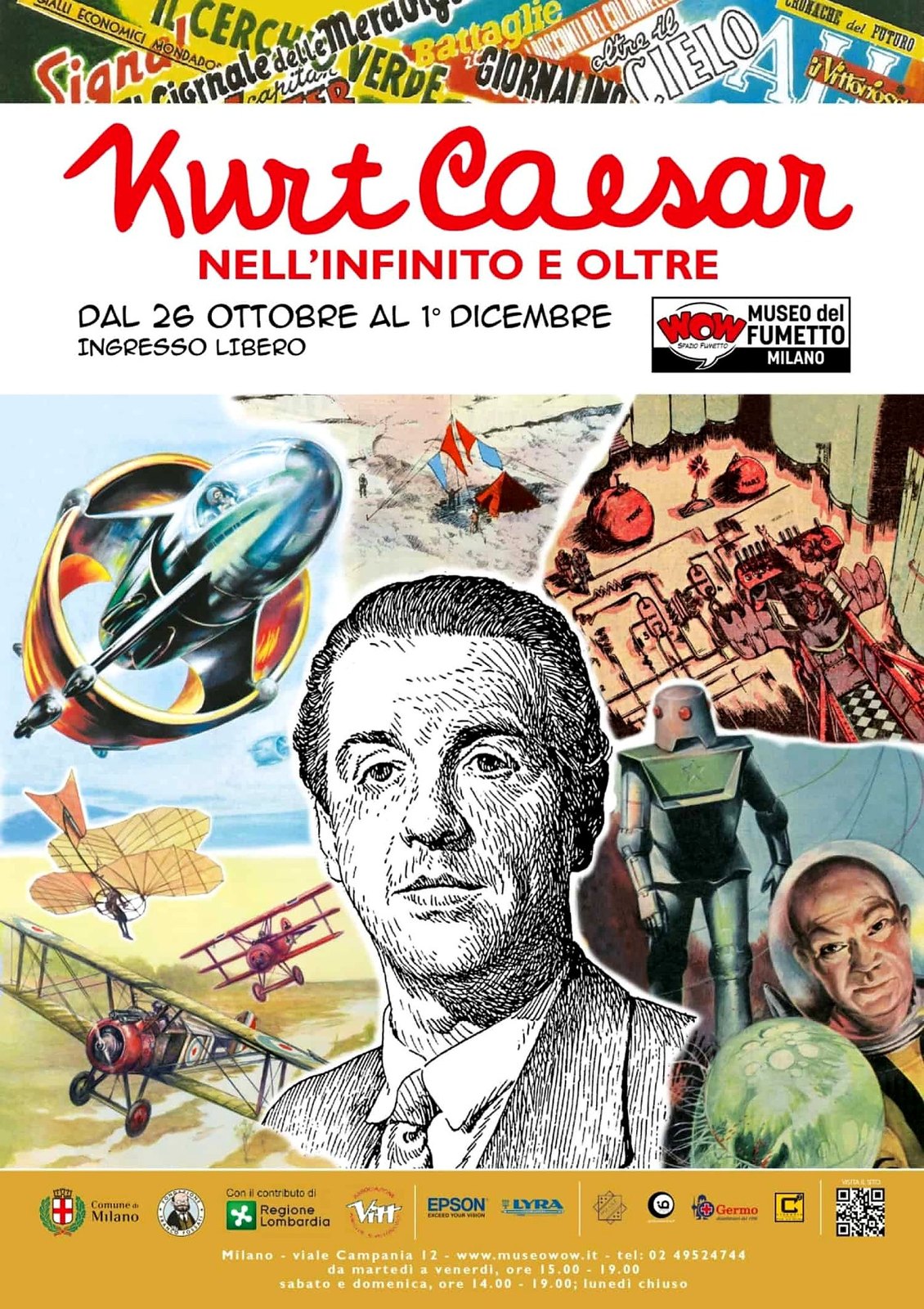
Retrospettiva al WOW Spazio Fumetto, Milano
Retrospective at WOW Spazio Fumetto, Milan
Retrospektive im WOW Spazio Fumetto, Mailand
"Nell'infinito e oltre", a cinquant'anni dalla morte.
"To Infinity and Beyond", fifty years after his death.
„Nell'infinito e oltre“, fünfzig Jahre nach seinem Tod.
III
§ III
Le OpereThe WorksDie Werke
Quarant'anni di pubblicazioni, in tre lingue, dai fumetti d'avventura alle copertine di fantascienza.Forty years of publications, in three languages, from adventure comics to science-fiction covers.Vierzig Jahre Veröffentlichungen, in drei Sprachen, von Abenteuercomics bis zu Science-Fiction-Titelbildern.
1938—1943 · 1947—1981
Romano il Legionario
A.V.E. · Il Vittorioso · Ciarrapico
Dieci cineromanzi dell'aviatore-eroe che attraversa la Guerra civile spagnola, il Tibet, l'Atlantico, i deserti africani. Tre storie postume edite da Ciarrapico nel 1981.
Ten cine-novels of the aviator-hero across the Spanish Civil War, Tibet, the Atlantic, the African deserts. Three posthumous tales published by Ciarrapico in 1981.
Zehn Bildromane des Fliegerhelden durch den Spanischen Bürgerkrieg, Tibet, den Atlantik, die afrikanischen Wüsten. Drei postume Geschichten, 1981 bei Ciarrapico erschienen.
1937—1954
Will Sparrow, il pirata del cielo
Casa Editrice Moderna · Albo d'Oro Mondadori
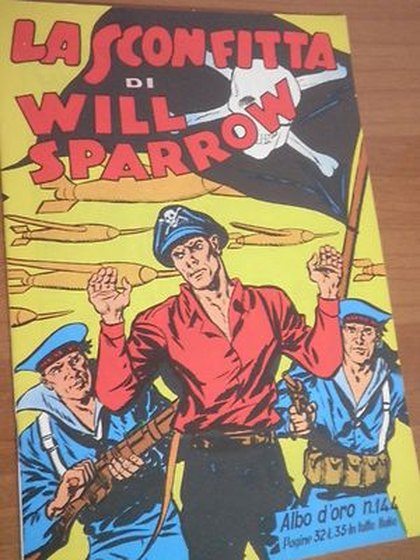
Il primo "eroe negativo" del fumetto italiano: aviatore-pirata rinnegato, creato da Caesar nel 1937. In copertina, La sconfitta di Will Sparrow (Albo d'Oro n. 144). Esportato precocemente nel mercato anglofono come Sky Pirates.
The first "negative hero" of Italian comics: a renegade pirate-aviator created by Caesar in 1937. On the cover, La sconfitta di Will Sparrow (Albo d'Oro no. 144). Exported early to the English market as Sky Pirates.
Der erste „negative Held“ des italienischen Comics: ein abtrünniger Piraten-Flieger, 1937 von Caesar erschaffen. Auf dem Umschlag La sconfitta di Will Sparrow (Albo d'Oro Nr. 144). Früh als Sky Pirates auf den englischsprachigen Markt exportiert.
1943 · 1994 · 2007
Marsch und Kampf des d. Afrikakorps
Carl Röhrig Verlag · München
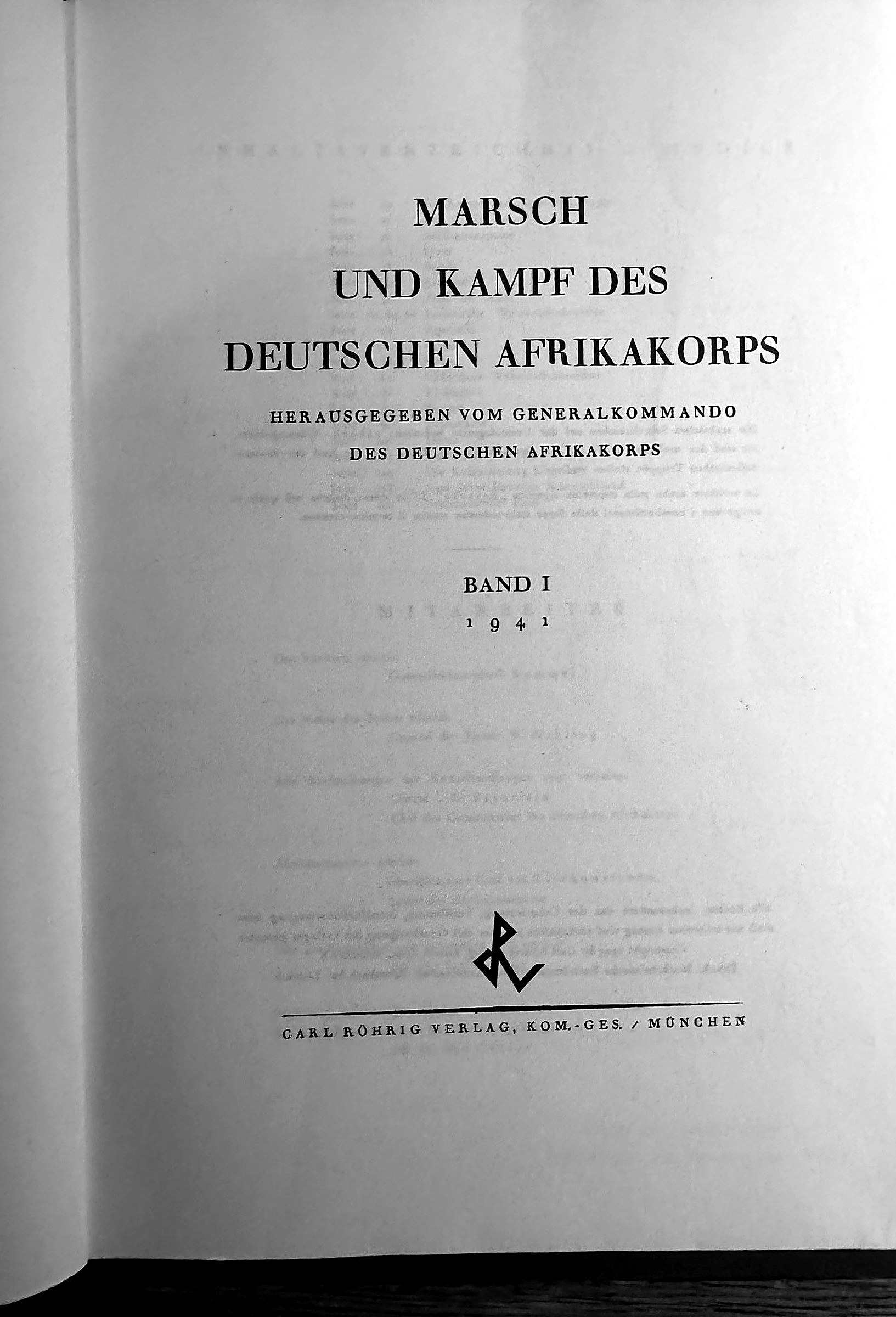
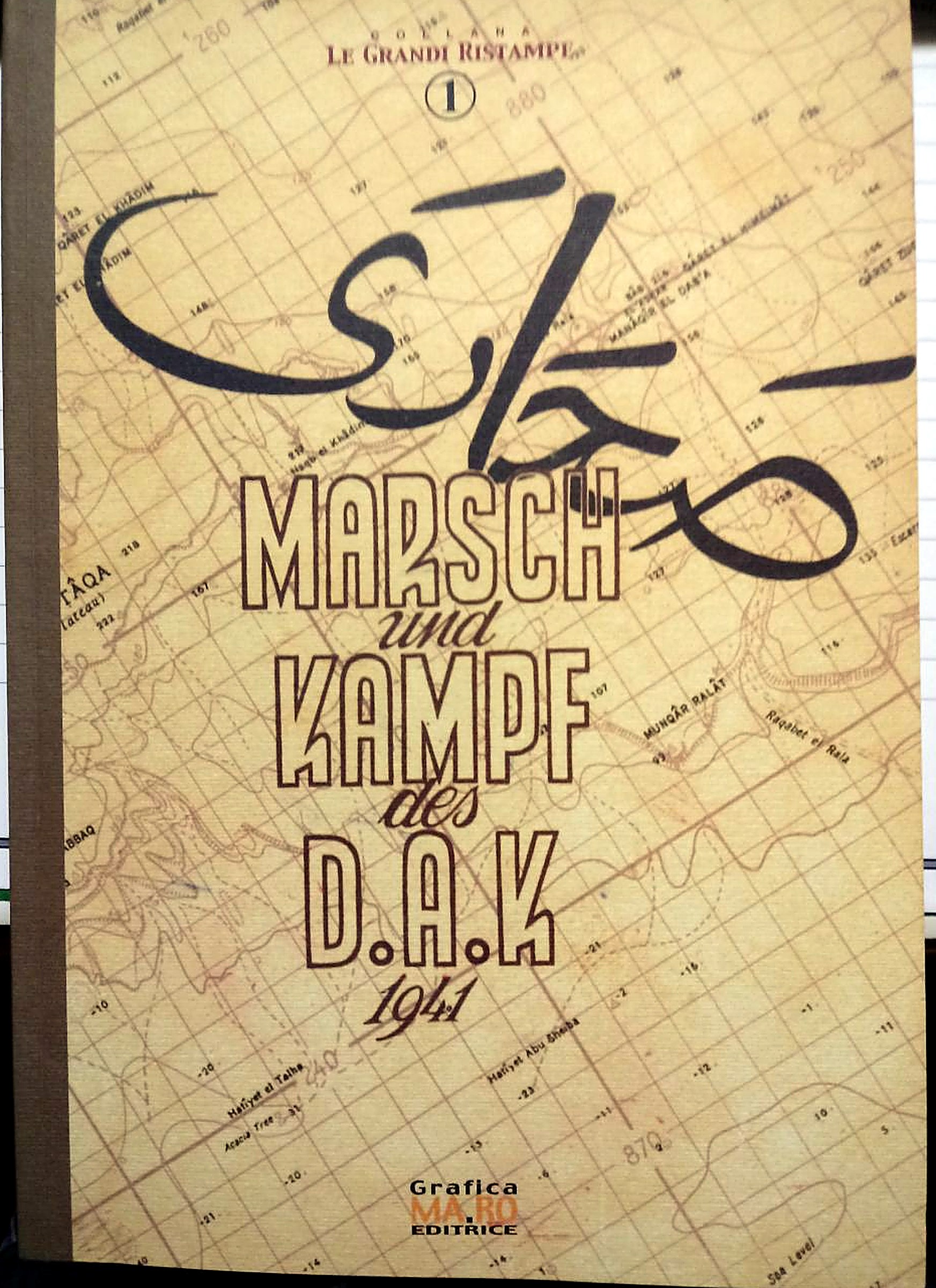
Volume bilingue commissionato dal Generalkommando del DAK, con prefazione manoscritta di Rommel. Disegni a carboncino al fronte: novanta secondo alcune fonti, centosette secondo Franchetti. Ristampe: Mittler & Sohn 1994, Grafica Ma.Ro 2007.
Bilingual volume commissioned by the DAK General Command, with Rommel's handwritten preface. Charcoal drawings at the front: ninety by some accounts, one hundred and seven according to Franchetti. Reprints: Mittler & Sohn 1994, Grafica Ma.Ro 2007.
Zweisprachiger Band im Auftrag des Generalkommandos des DAK, mit Rommels handschriftlichem Vorwort. Kohlezeichnungen an der Front: neunzig nach einigen Quellen, einhundertsieben laut Franchetti. Nachdrucke: Mittler & Sohn 1994, Grafica Ma.Ro 2007.
1972 · 1976
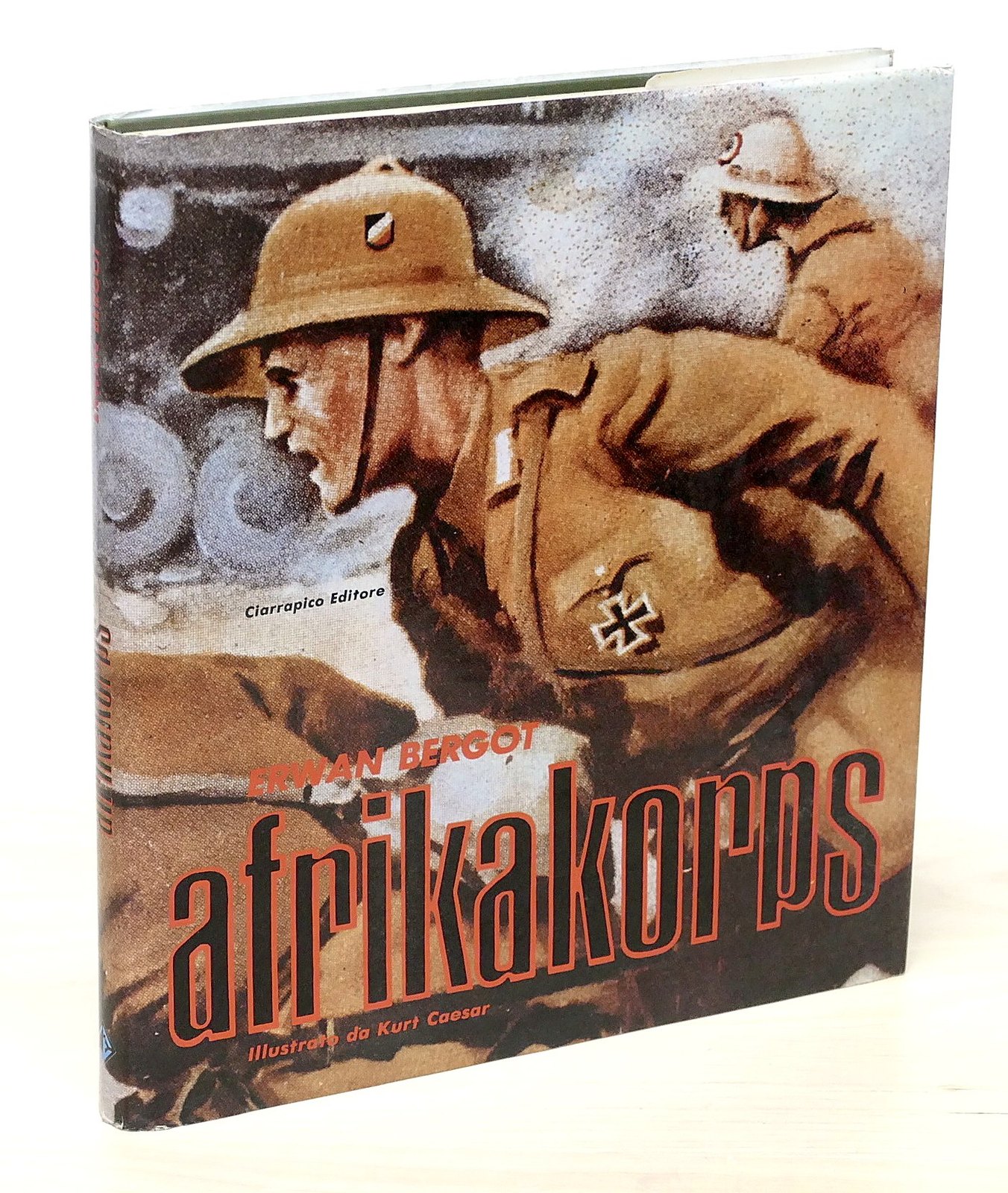
Afrikakorps · Erwan Bergot
Ciarrapico Editore · Roma
Edizione italiana (1976) della celebre rievocazione di Erwan Bergot (L'Afrikakorps, Balland, 1972), illustrata e con copertina di Kurt Caesar. Un volume di grande formato, 212 pagine, che riportò in luce le tavole africane dell'artista per due generazioni di lettori.
Italian edition (1976) of Erwan Bergot's celebrated account (L'Afrikakorps, Balland, 1972), illustrated and with a cover by Kurt Caesar. A large-format volume of 212 pages that brought the artist's African plates back to light for two generations of readers.
Italienische Ausgabe (1976) der berühmten Schilderung von Erwan Bergot (L'Afrikakorps, Balland, 1972), illustriert und mit einem Umschlag von Kurt Caesar. Ein großformatiger Band von 212 Seiten, der die Afrika-Tafeln des Künstlers für zwei Lesergenerationen wieder ans Licht brachte.
2007
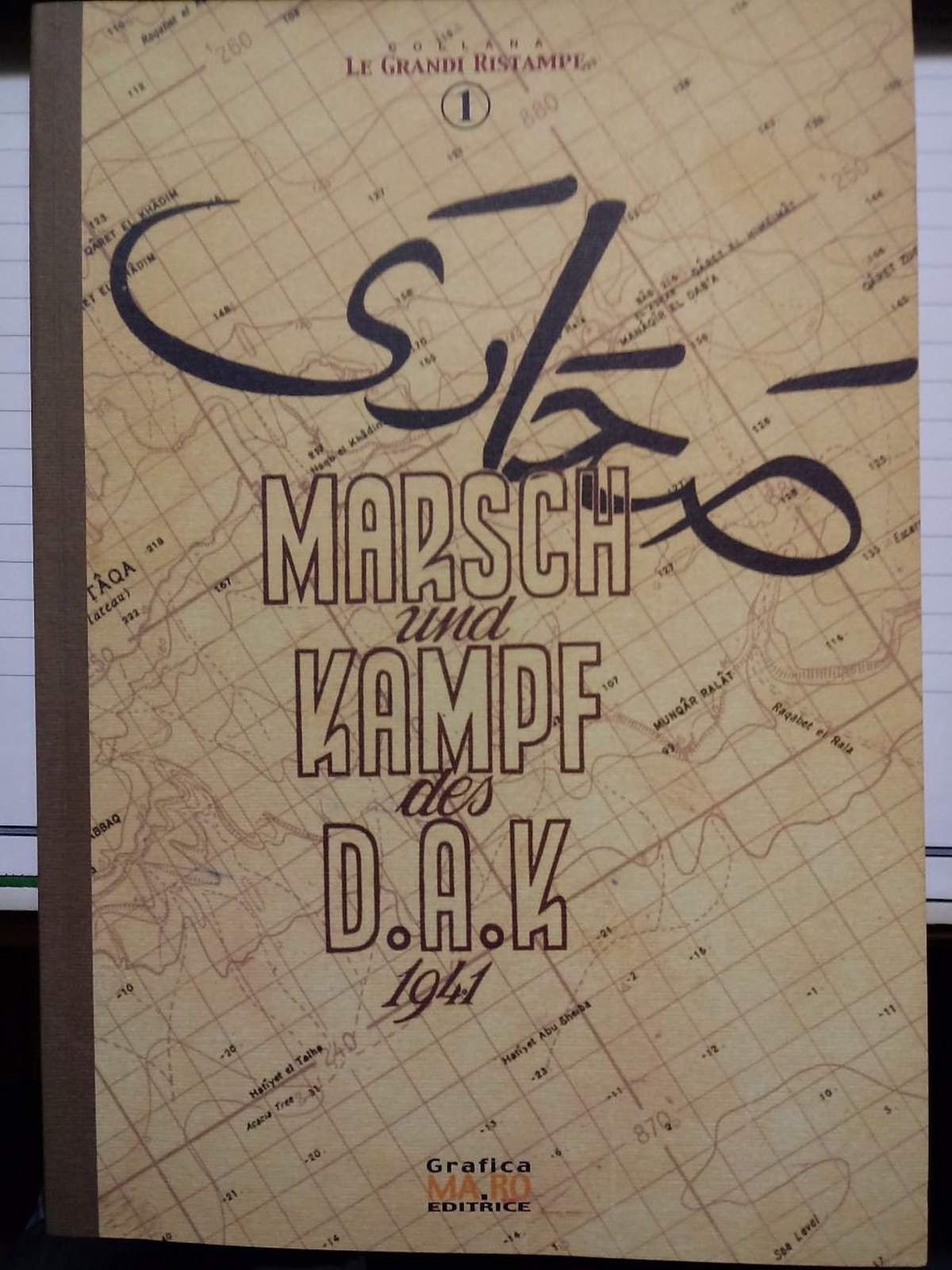
Marsch und Kampf · La ristampa
Grafica Ma.Ro · Le Grandi Ristampe 1
La prima ristampa anastatica italiana (2007) del rarissimo volume del 1943, numero inaugurale della collana «Le Grandi Ristampe». Restituì ai collezionisti l'opera bellica di Caesar in un'edizione fedele all'originale.
The first Italian facsimile reprint (2007) of the very rare 1943 volume, opening title of the «Le Grandi Ristampe» series. It returned Caesar's wartime work to collectors in an edition faithful to the original.
Der erste italienische anastatische Nachdruck (2007) des sehr seltenen Bandes von 1943, Eröffnungsnummer der Reihe «Le Grandi Ristampe». Er machte Caesars Kriegswerk den Sammlern in einer originalgetreuen Ausgabe wieder zugänglich.
1952 — 1959
Urania · Le copertine
Mondadori · Milano
Centosettantaquattro copertine catalogate per la più importante collana italiana di fantascienza. Tecnica a tempera, base fotografica, suggestione iperrealistica.
One hundred and seventy-four catalogued covers for the leading Italian science-fiction series. Tempera technique, photographic base, hyperrealistic effect.
Einhundertvierundsiebzig katalogisierte Titelbilder für die wichtigste italienische Science-Fiction-Reihe. Temperatechnik, fotografische Grundlage, hyperrealistische Wirkung.
1950 · 1957—1958
Oltre il Cielo
Quindicinale · Roma
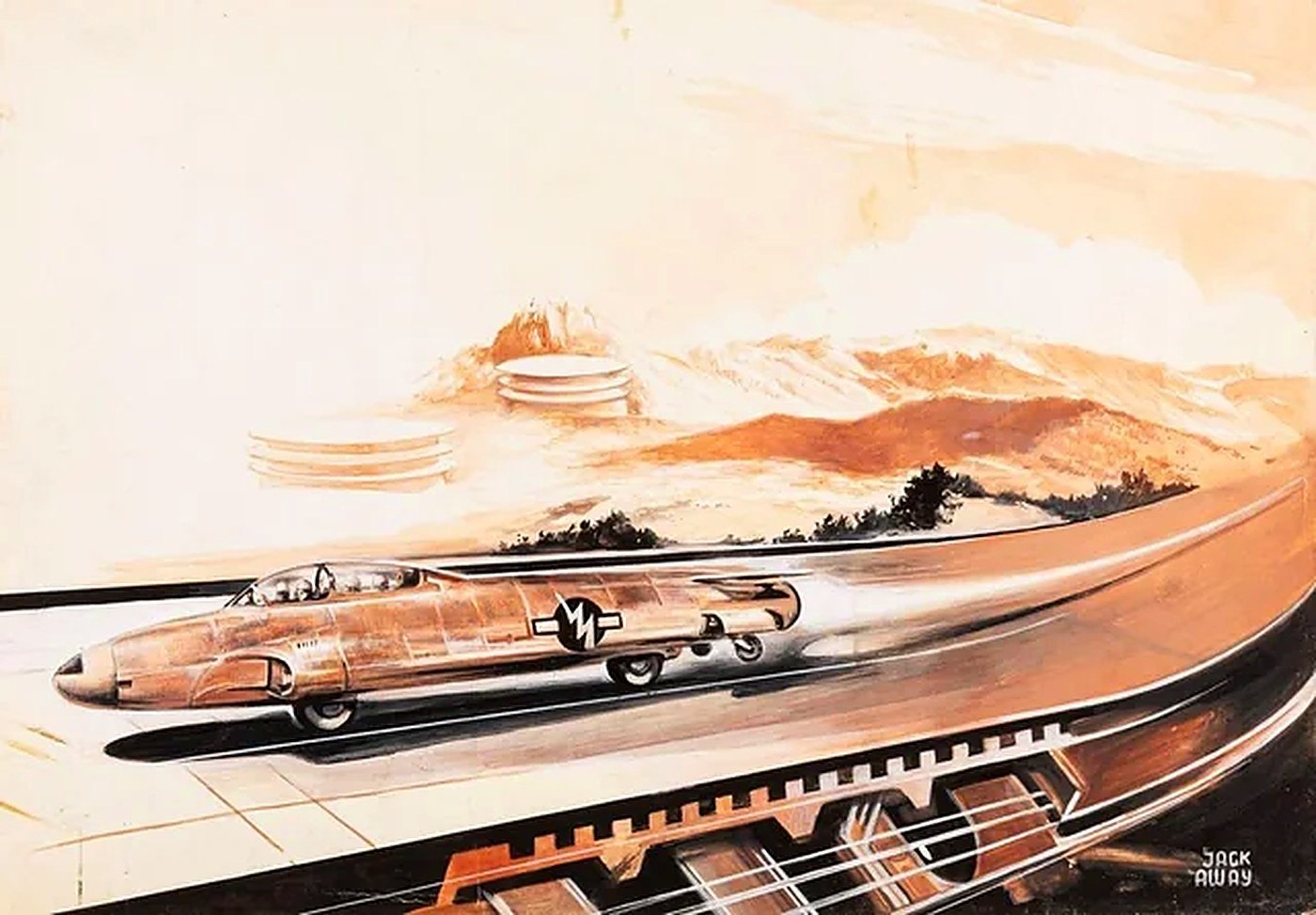
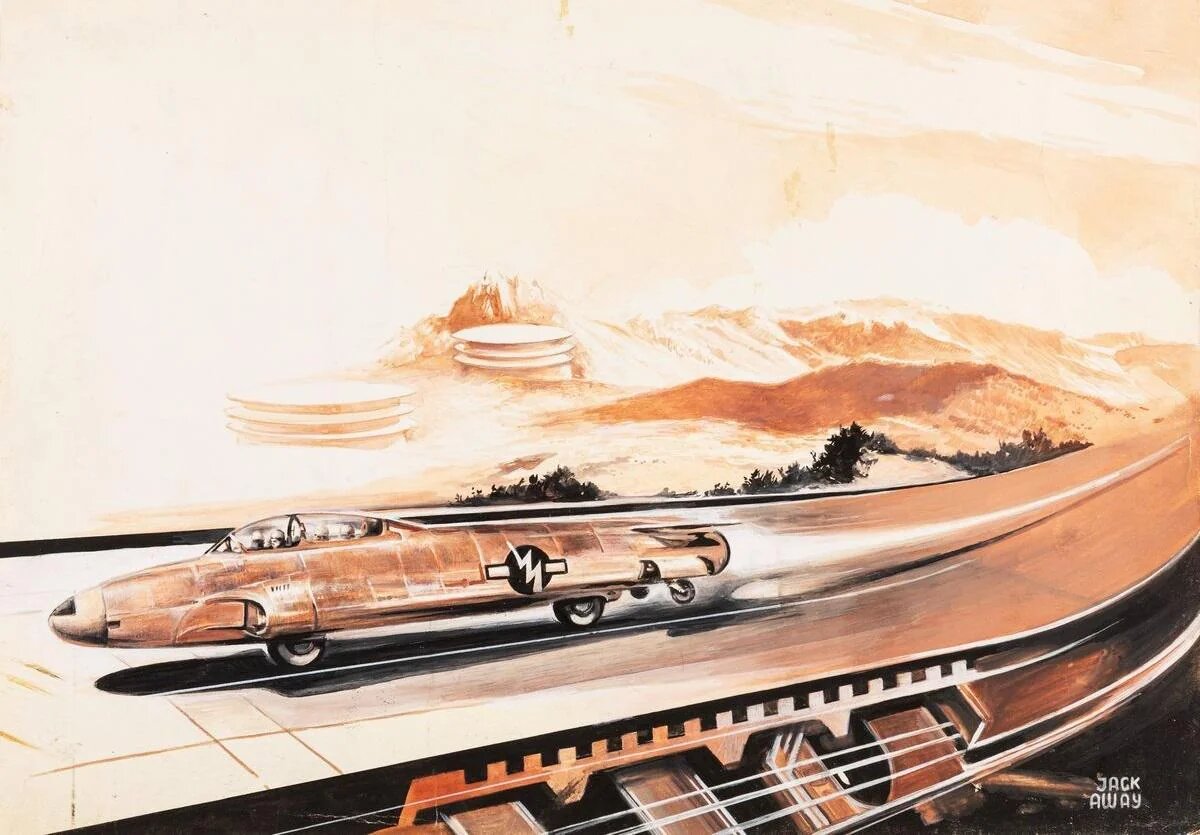
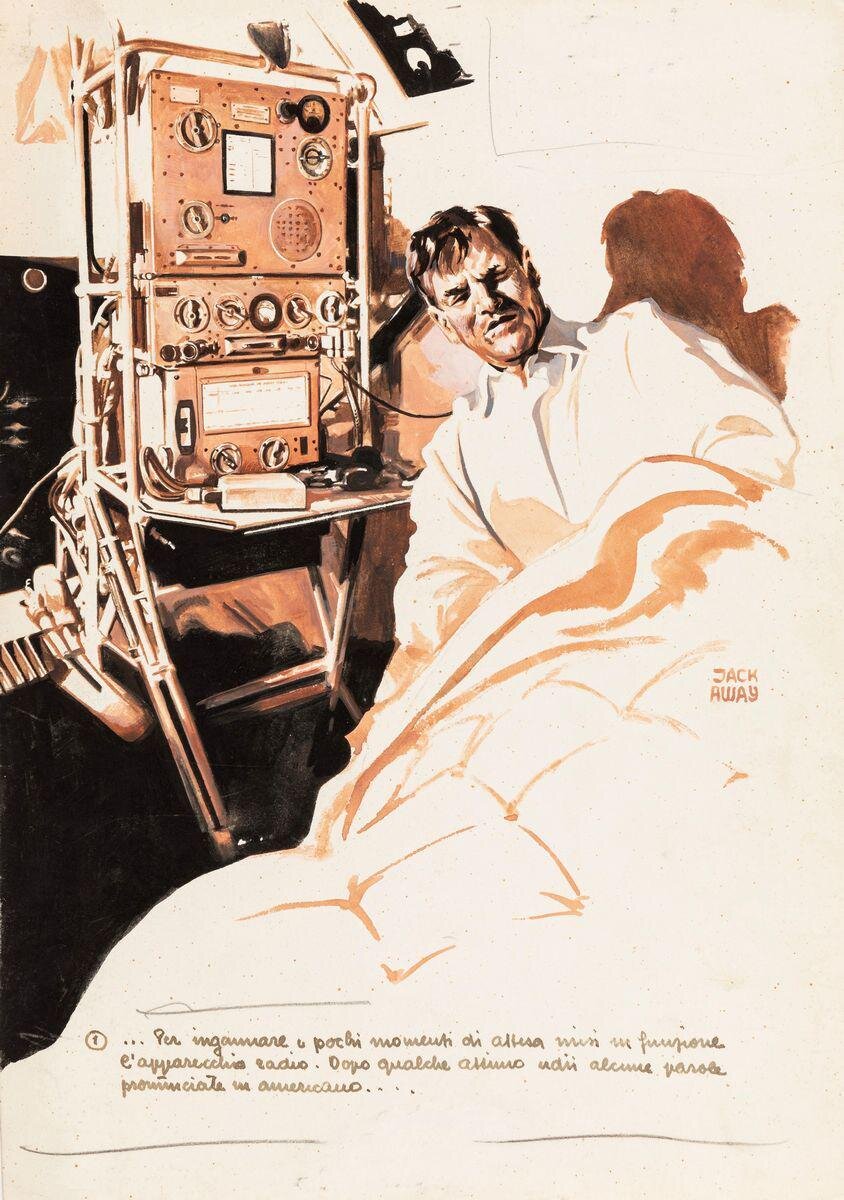
Almeno sette copertine documentate per il quindicinale di fantascienza. Razzi, astronavi, esplorazioni planetarie firmate "Jack Away".
At least seven documented covers for the science-fiction fortnightly. Rockets, spacecraft, planetary exploration signed "Jack Away".
Mindestens sieben belegte Titelbilder für die Science-Fiction-Halbmonatsschrift. Raketen, Raumschiffe, Planetenexpeditionen, signiert „Jack Away“.
1957—1958
Cronache del Futuro
Kappa Edizioni · Roma
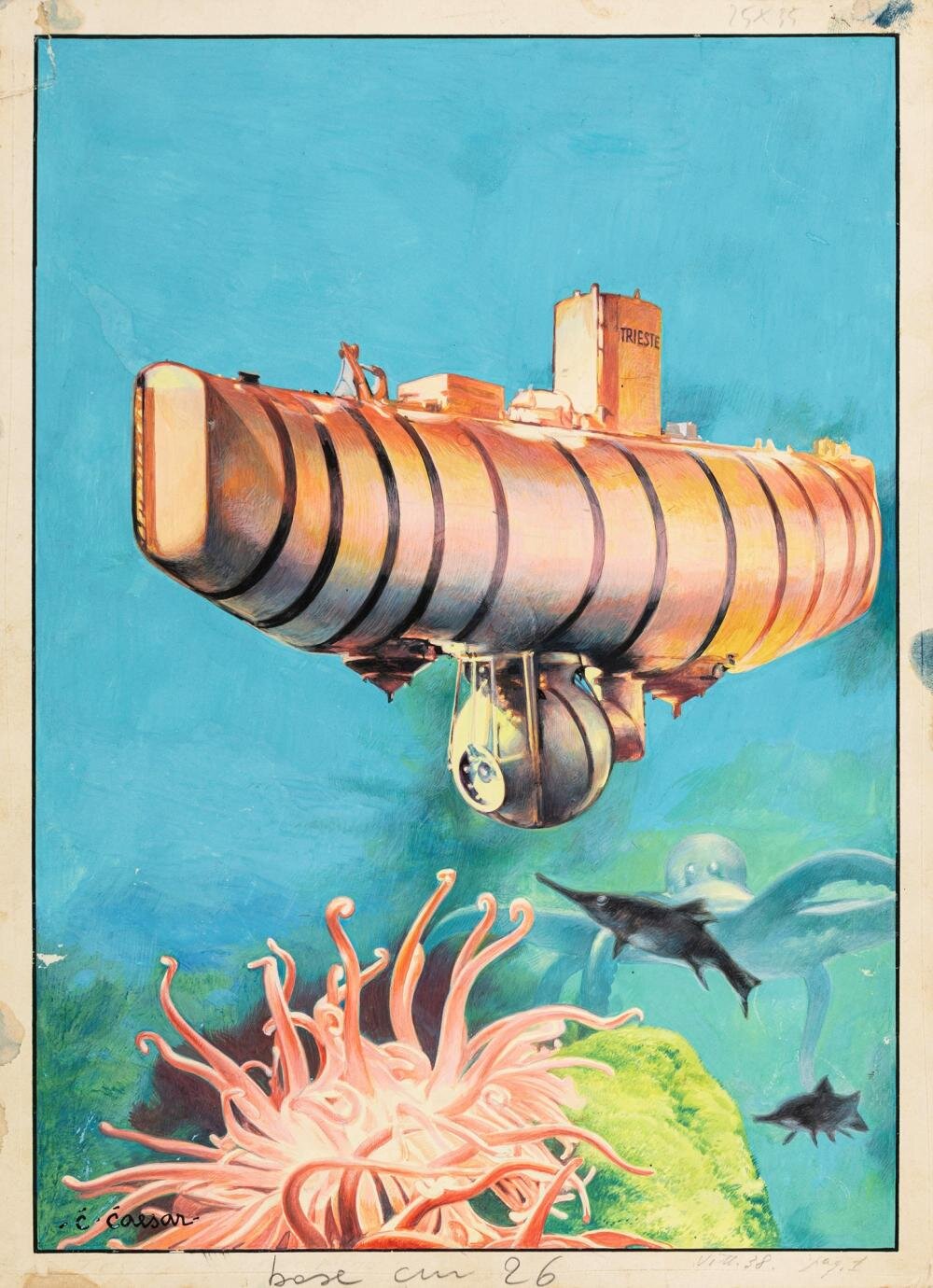
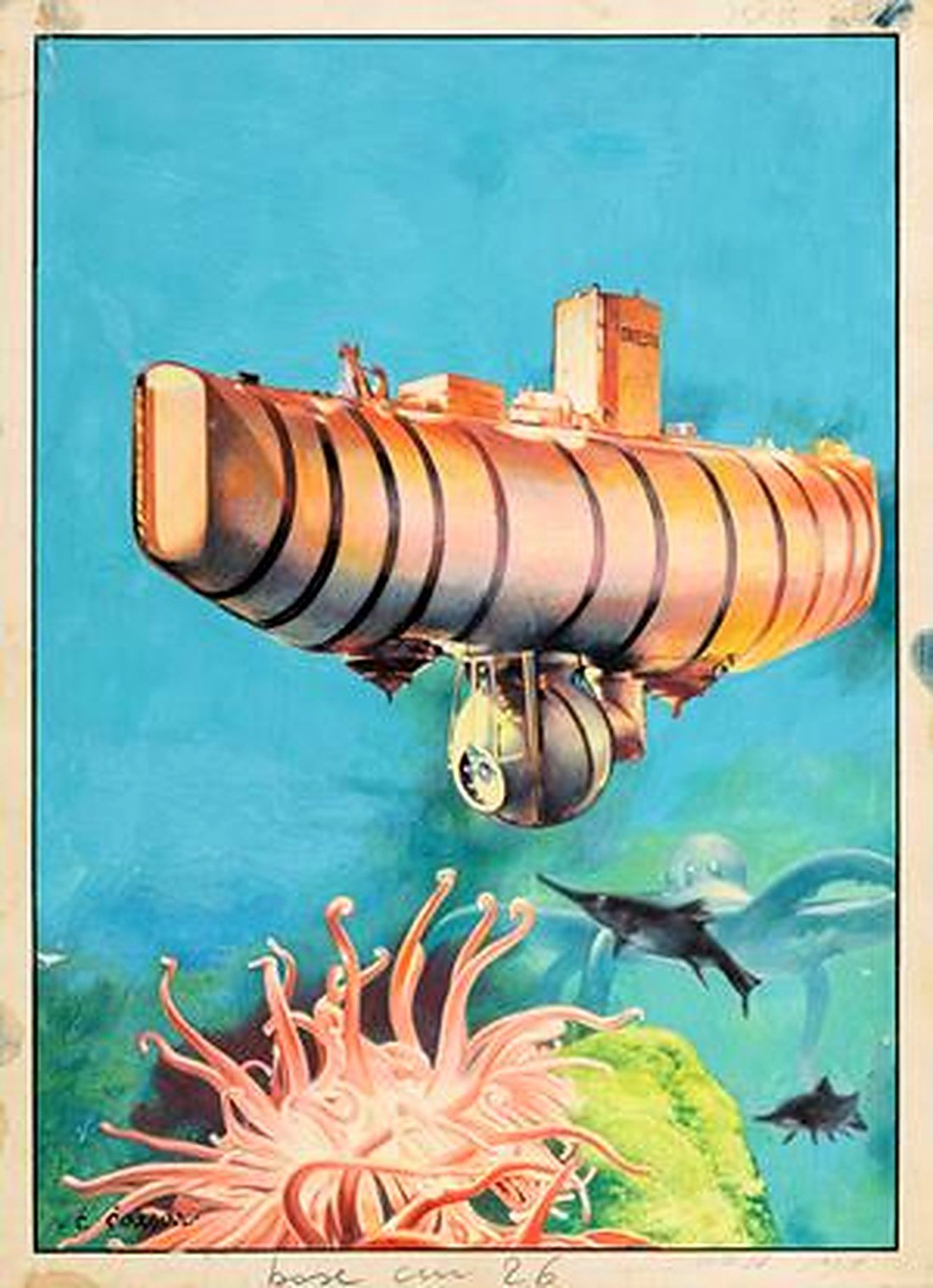
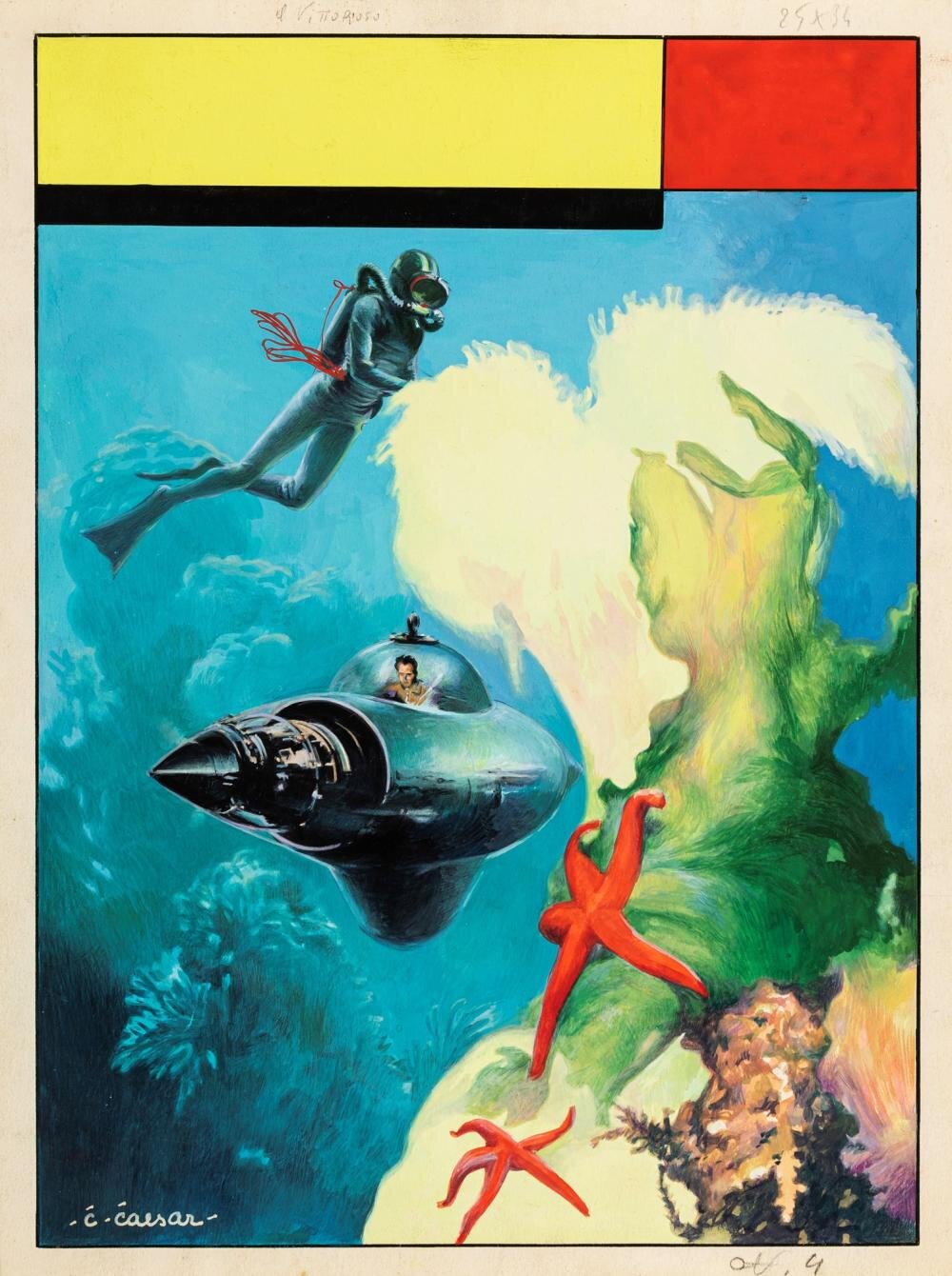
Una decina di copertine in dieci mesi. Originale a tempera del batiscafo. Collaborazione interrotta per difficoltà nei pagamenti.
About a dozen covers in ten months. Original tempera of the bathyscaphe. Collaboration broken off due to payment difficulties.
Etwa ein Dutzend Titelbilder in zehn Monaten. Originaltempera des Bathyscaphen. Zusammenarbeit wegen Zahlungsschwierigkeiten abgebrochen.
1960s
Battle · War · Air Ace
Fleetway · London
Per il mercato britannico: Battler Britton, Spy 13, Dogfight Dixon, Jet-Ace Logan. Mai per Eagle / Dan Dare, malgrado l'attribuzione ricorrente.
For the British market: Battler Britton, Spy 13, Dogfight Dixon, Jet-Ace Logan. Never for Eagle / Dan Dare, despite the recurring attribution.
Für den britischen Markt: Battler Britton, Spy 13, Dogfight Dixon, Jet-Ace Logan. Nie für Eagle / Dan Dare, trotz der wiederkehrenden Zuschreibung.
1967—1968 · 2024
Perry Rhodan im Bild · WOW 2024
Moewig-Verlag · WOW Spazio Fumetto
Principale disegnatore dei 27 albi della più antica serie a fumetti del Perryverso. Retrospettiva 2024 al WOW Spazio Fumetto di Milano: "Nell'infinito e oltre".
Principal artist of the 27 issues of the oldest comic series of the Perryverse. 2024 retrospective at WOW Spazio Fumetto in Milan: "To Infinity and Beyond".
Hauptzeichner der 27 Hefte der ältesten Comicserie des Perryversums. Retrospektive 2024 im WOW Spazio Fumetto in Mailand: „Nell'infinito e oltre“.
2024
Le copertine di Kurt Caesar
Associazione Amici de «il Vittorioso»
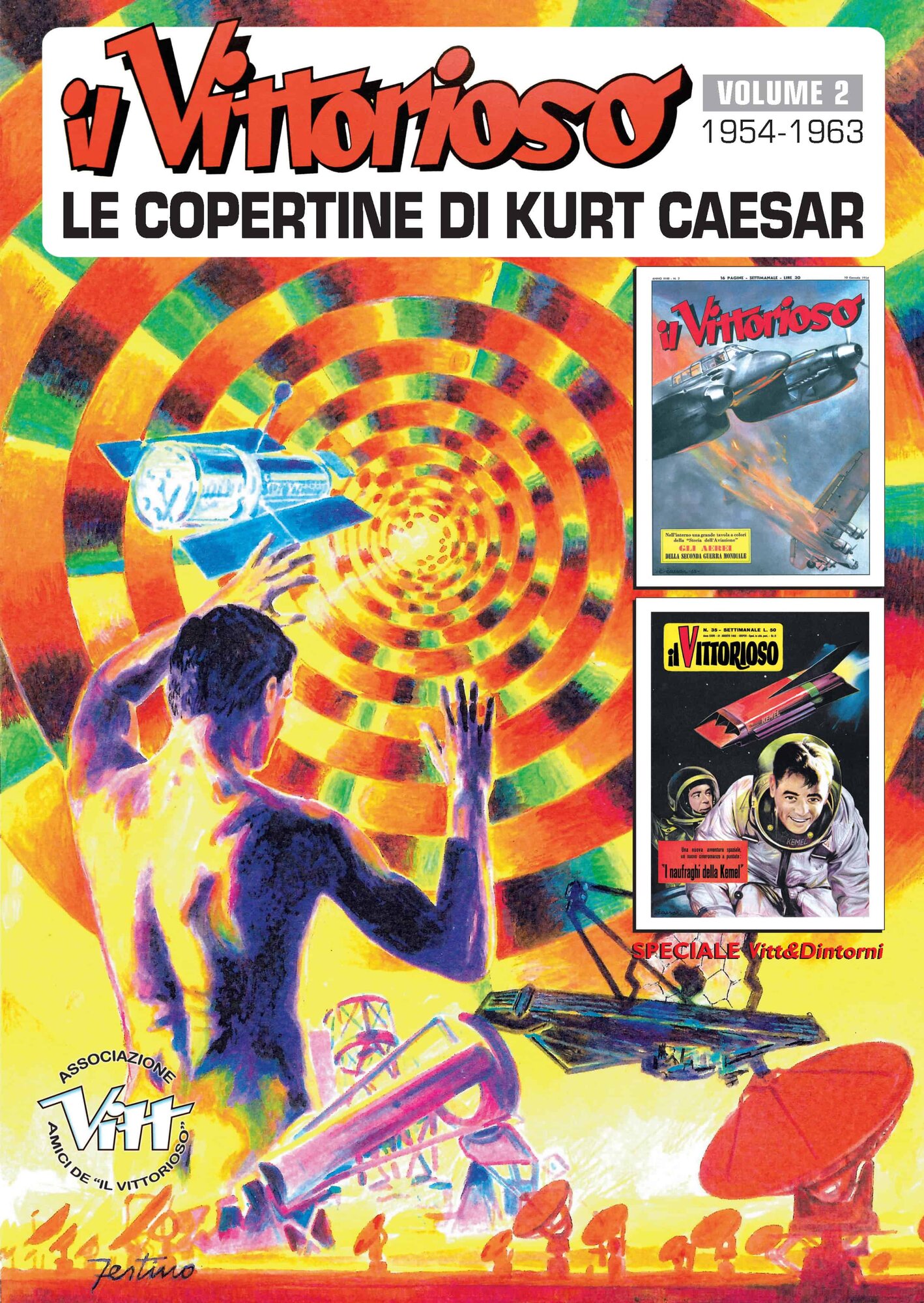
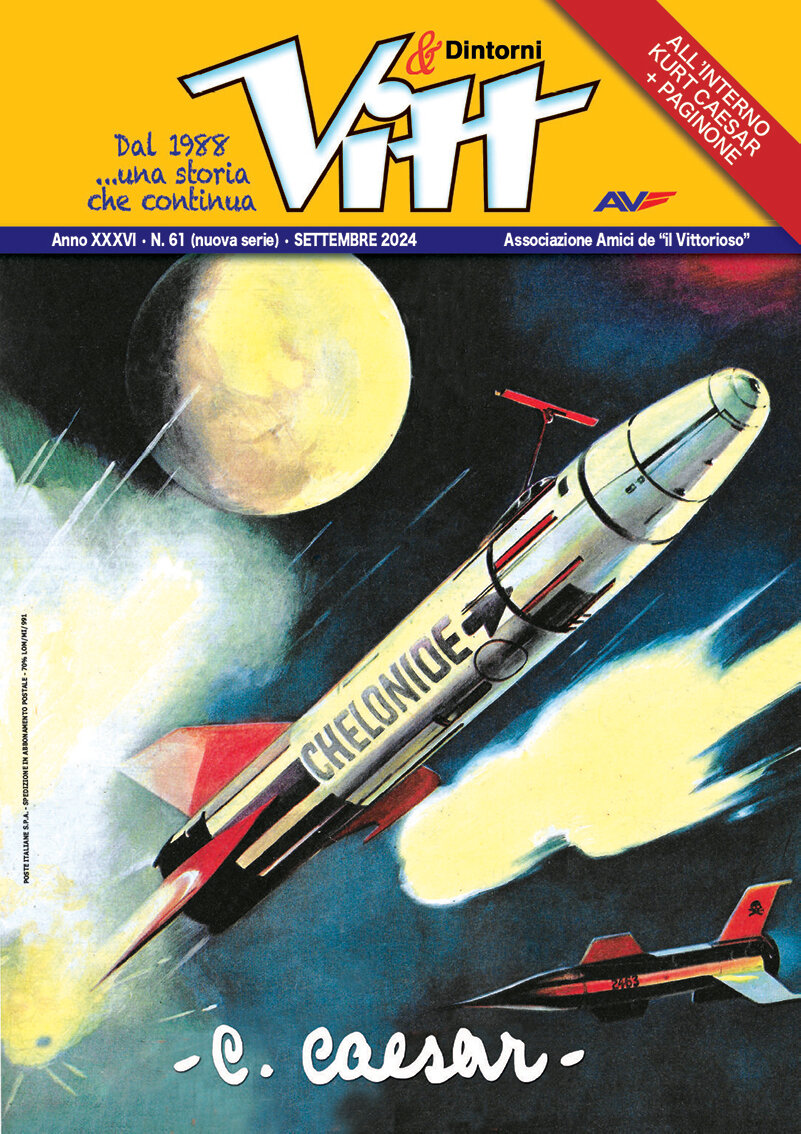
La raccolta antologica delle copertine realizzate per Il Vittorioso (Vol. 2, 1954–1963), edita dall'Associazione Amici de «il Vittorioso», con lo speciale Vitt & Dintorni n. 61 (settembre 2024) interamente dedicato all'artista.
The anthology of the covers made for Il Vittorioso (Vol. 2, 1954–1963), published by the Associazione Amici de «il Vittorioso», with the special issue Vitt & Dintorni no. 61 (September 2024) entirely devoted to the artist.
Die Anthologie der für Il Vittorioso geschaffenen Titelbilder (Bd. 2, 1954–1963), herausgegeben von der Associazione Amici de «il Vittorioso», mit dem Sonderheft Vitt & Dintorni Nr. 61 (September 2024), das ganz dem Künstler gewidmet ist.
IV
§ IV
La ResistenzaThe ResistanceDer Widerstand
L'ufficiale tedesco che riportò Angelo Chiesa a casa.The German officer who brought Angelo Chiesa home.Der deutsche Offizier, der Angelo Chiesa nach Hause brachte.
Una mattina di fine novembre del 1944, nel carcere dei Miogni di Varese, un secondino aprì la cella di Angelo Chiesa per una visita non prevista. Nella sala dei colloqui c'era un ufficiale tedesco in divisa impeccabile. "Mi chiamo dottor Kurt Caesar", disse, e mostrò una requisitoria del Tribunale Speciale per la difesa dello Stato di Verona, perfettamente in regola, perfettamente falsa.
Il giorno dopo il ragazzo non venne consegnato a Verona, ma portato nella villa cospirativa di Venegono Superiore. Stessa sorte sarebbe toccata, nelle settimane successive, ad Antonio Cetin "Libero", e poi al partigiano Alessio Leggi "Ivan", classe 1925, arrestato l'8 ottobre 1944 per un attentato al comandante della Decima Mas a Sesto Calende.
One morning in late November 1944, at the Miogni prison in Varese, a guard opened Angelo Chiesa's cell for an unscheduled visit. In the meeting room stood a German officer in impeccable uniform. "My name is Doctor Kurt Caesar", he said, and produced a transfer order from the Special Tribunal in Verona — perfectly in order, perfectly false.
The next day the boy was not delivered to Verona, but taken to the conspiratorial villa at Venegono Superiore. The same fate would meet, in the following weeks, Antonio Cetin "Libero", and then the partisan Alessio Leggi "Ivan", born 1925, arrested on 8 October 1944 for an attack on the Decima Mas commander at Sesto Calende.
An einem Morgen Ende November 1944 öffnete ein Wärter im Gefängnis Miogni in Varese Angelo Chiesas Zelle für einen unangekündigten Besuch. Im Sprechzimmer stand ein deutscher Offizier in tadelloser Uniform. „Ich heiße Doktor Kurt Caesar“, sagte er und zeigte eine Verfügung des Sondergerichts zur Verteidigung des Staates in Verona vor — vollkommen ordnungsgemäß, vollkommen gefälscht.
Am nächsten Tag wurde der Junge nicht nach Verona überstellt, sondern in die konspirative Villa von Venegono Superiore gebracht. Dasselbe Schicksal sollte in den folgenden Wochen Antonio Cetin „Libero“ ereilen und dann den Partisanen Alessio Leggi „Ivan“, Jahrgang 1925, verhaftet am 8. Oktober 1944 wegen eines Attentats auf den Kommandeur der Decima Mas in Sesto Calende.
Perché Kurt Caesar lo ha fatto? Come mai un ufficiale tedesco rischiò la vita per aiutare uomini della Resistenza? Quando ho visto il bellissimo film Schindler's List, non ho potuto fare a meno di pensare a quell'ufficiale.Why did Kurt Caesar do it? Why did a German officer risk his life to help men of the Resistance? When I saw the beautiful film Schindler's List, I could not help thinking of that officer.Warum hat Kurt Caesar es getan? Wie kommt es, dass ein deutscher Offizier sein Leben riskierte, um Männern des Widerstands zu helfen? Als ich den wunderbaren Film Schindlers Liste sah, musste ich unweigerlich an jenen Offizier denken.
Angelo Chiesa · Racconti di vita e di lotta · 2003 · p. 112
Fig. 03 — Poste Partigiane Italiane, £5. Il bozzetto del francobollo «Brigate d'Assalto Garibaldi — Morte agli invasori tedeschi» disegnato da Kurt Caesar nel 1944, mai realizzato. Lo stesso uomo che firmava i disegni dell'Afrikakorps disegnava ora per la Resistenza.Fig. 03 — Italian Partisan Post, £5. The design for the «Garibaldi Assault Brigades — Death to the German invaders» stamp drawn by Kurt Caesar in 1944, never issued. The same man who signed the Afrikakorps drawings was now drawing for the Resistance.Abb. 03 — Italienische Partisanenpost, £5. Der Entwurf der Briefmarke «Garibaldi-Sturmbrigaden — Tod den deutschen Eindringlingen», 1944 von Kurt Caesar gezeichnet, nie ausgegeben. Derselbe Mann, der die Afrikakorps-Zeichnungen signierte, zeichnete nun für den Widerstand.
Caesar era effettivo della 121ª Brigata d'Assalto Garibaldi "Walter Marcobi", primo distaccamento del Battaglione "Augusto Covalere", comandato da Fortunato Haiz "Vittorio". Era stato contattato da Ottavio Premazzi "Fiorenzo", gappista del Varesotto. Nella villa di Venegono si incontravano settimanalmente Chiesa, Barbatti, il carrozziere Castagna, il maestro Matteo Mauceri, i segretari della Federazione provinciale del PCI, i comandanti della 121ª. Caesar segnalava spostamenti di truppe del Reich, procurava armi, viveri, tessere annonarie, falsi documenti, nascondigli. Per giorni Premazzi, Chiesa, il carrozziere Castagna e lo stesso maestro Mauceri restarono nascosti nella torretta della villa, accuditi dalla moglie Elfriede, allora in attesa del loro figlio Rolf.
Progettò un sequestro di Mussolini lungo la strada che dalla villa di Gargnano portava agli uffici della Repubblica Sociale. Studiò un sabotaggio elettrico di Milano sfruttando le proprie conoscenze tecniche sulle centrali idroelettriche AEM in Valtellina. Confidò una sera, sottovoce, che i tedeschi "erano vicini alla costruzione di un'arma decisiva". Solo dopo la guerra si capì: era il Uranverein, il progetto atomico nazista.
Quel «maestro» aveva un nome — Matteo Mauceri — e una storia che si specchia in quella di Caesar. Insegnante antifascista, alla Liberazione fu nominato dal CLN sindaco di Venegono; morì proprio il 25 aprile 1945, ucciso per disgrazia da un colpo di fucile esploso da un giovane del paese. Oggi la piazza del municipio porta il suo nome. Suo figlio Gianfranco Mauceri, studente di medicina e partigiano «Brambillino», radiotelegrafista della Brigata «Battisti», era già caduto il 16 giugno 1944 all'Alpe Fornà sul Monte Zeda: senza più messaggi da trasmettere, occultò la radio, imbracciò il fucile e sparò con i compagni fino alla fine. Mentre l'ufficiale tedesco strappava i prigionieri ai Miogni, la famiglia che gli sedeva accanto nella villa pagava il prezzo più alto.
Caesar was an effective member of the 121st Garibaldi Assault Brigade "Walter Marcobi", first detachment of the "Augusto Covalere" Battalion, commanded by Fortunato Haiz "Vittorio". He had been contacted by Ottavio Premazzi "Fiorenzo". The Venegono villa hosted weekly Chiesa, Barbatti, the bodyworker Castagna, the schoolteacher Matteo Mauceri, the Communist Party provincial secretaries, the commanders of the 121st. Caesar signalled Reich troop movements, supplied arms, food, ration cards, forged documents, hideouts. For days Premazzi, Chiesa, the bodyworker Castagna and the schoolteacher Mauceri himself stayed hidden in the villa's turret, looked after by his wife Elfriede, then expecting their son Rolf.
He planned a kidnap of Mussolini along the road from the Gargnano villa to the offices of the Italian Social Republic. He studied an electrical sabotage of Milan using his technical knowledge of the AEM hydroelectric plants in Valtellina. One evening he confided, in a whisper, that the Germans "were close to a decisive weapon". Only after the war was it understood: it was the Uranverein, the Nazi atomic project.
That «schoolteacher» had a name — Matteo Mauceri — and a story that mirrors Caesar's. An antifascist teacher, at the Liberation he was appointed by the CLN as mayor of Venegono; he died on 25 April 1945 itself, killed by accident from a rifle shot fired by a local youth. Today the town-hall square bears his name. His son Gianfranco Mauceri, a medical student and partisan «Brambillino», radio-operator of the «Battisti» Brigade, had already fallen on 16 June 1944 at Alpe Fornà on Monte Zeda: with no more messages to send, he hid the transmitter, took up his rifle and fired with his comrades to the end. While the German officer was prying prisoners out of the Miogni jail, the family that sat beside him in the villa paid the highest price.
Caesar war aktives Mitglied der 121. Garibaldi-Sturmbrigade „Walter Marcobi“, erstes Detachement des Bataillons „Augusto Covalere“, befehligt von Fortunato Haiz „Vittorio“. Kontaktiert hatte ihn Ottavio Premazzi „Fiorenzo“, GAP-Kämpfer im Varesotto. In der Villa von Venegono trafen sich wöchentlich Chiesa, Barbatti, der Karosseriebauer Castagna, der Lehrer Matteo Mauceri, die Sekretäre der Provinzföderation der KPI, die Kommandeure der 121. Caesar meldete Truppenbewegungen des Reichs, beschaffte Waffen, Proviant, Lebensmittelkarten, gefälschte Dokumente, Verstecke. Tagelang hielten sich Premazzi, Chiesa, der Karosseriebauer Castagna und der Lehrer Mauceri selbst im Türmchen der Villa versteckt, umsorgt von seiner Frau Elfriede, die damals ihren Sohn Rolf erwartete.
Er plante eine Entführung Mussolinis auf der Straße von der Villa in Gargnano zu den Ämtern der Sozialrepublik. Er erwog eine Sabotage der Stromversorgung Mailands mithilfe seiner technischen Kenntnisse über die AEM-Wasserkraftwerke im Veltlin. Eines Abends vertraute er leise an, die Deutschen seien „dem Bau einer entscheidenden Waffe nahe“. Erst nach dem Krieg verstand man: Es war der Uranverein, das nationalsozialistische Atomprojekt.
Jener «Lehrer» hatte einen Namen — Matteo Mauceri — und eine Geschichte, die sich in jener Caesars spiegelt. Als antifaschistischer Lehrer wurde er bei der Befreiung vom CLN zum Bürgermeister von Venegono ernannt; er starb jedoch ausgerechnet am 25. April 1945, versehentlich getötet durch den Gewehrschuss eines jungen Ortsansässigen. Heute trägt der Rathausplatz seinen Namen. Sein Sohn Gianfranco Mauceri, Medizinstudent und Partisan «Brambillino», Funker der Brigade «Battisti», war bereits am 16. Juni 1944 an der Alpe Fornà am Monte Zeda gefallen: ohne weitere Meldungen versteckte er das Funkgerät, griff zum Gewehr und schoss mit seinen Kameraden bis zuletzt. Während der deutsche Offizier Gefangene aus dem Miogni-Gefängnis holte, zahlte die Familie, die neben ihm in der Villa saß, den höchsten Preis.
I fratelli Mauceri, 30 nov. 1941. Carmelo Lino e Gianfranco, figli del maestro Matteo. Archivio famiglia Mauceri.The Mauceri brothers, 30 Nov 1941. Carmelo Lino and Gianfranco, sons of the schoolteacher Matteo. Mauceri family archive.Die Brüder Mauceri, 30. Nov. 1941. Carmelo Lino und Gianfranco, Söhne des Lehrers Matteo. Archiv der Familie Mauceri.Gianfranco Mauceri «Brambillino» (1924–1944). Studente di medicina, radiotelegrafista della Brigata «Battisti», caduto sul Monte Zeda. Archivio famiglia Mauceri.Gianfranco Mauceri «Brambillino» (1924–1944). Medical student, radio-operator of the «Battisti» Brigade, fallen on Monte Zeda. Mauceri family archive.Gianfranco Mauceri „Brambillino“ (1924–1944). Medizinstudent, Funker der Brigade „Battisti“, gefallen am Monte Zeda. Archiv der Familie Mauceri.Carmelo Lino Mauceri, fratello di Gianfranco. Ritratto dall'archivio familiare — un volto restituito a questa storia. Archivio famiglia Mauceri.Carmelo Lino Mauceri, Gianfranco's brother. Portrait from the family archive — a face restored to this story. Mauceri family archive.Carmelo Lino Mauceri, Bruder von Gianfranco. Porträt aus dem Familienarchiv — ein Gesicht, das dieser Geschichte zurückgegeben wird. Archiv der Familie Mauceri.
Fig. 04 — Venegono Superiore (località Monterosso) in una cartolina d'epoca. È il paese che fu teatro dell'attività cospirativa di Caesar: qui, in una villa, si tenevano le riunioni della 121ª Brigata Garibaldi e furono nascosti i prigionieri liberati dai Miogni. Sulla collina di Monterosso sorgerà nel 1949 la Casa del Popolo da lui progettata.Fig. 04 — Venegono Superiore (Monterosso district) in a period postcard. The town that was the stage of Caesar's conspiratorial activity: here, in a villa, the meetings of the 121st Garibaldi Brigade were held and the prisoners freed from the Miogni jail were hidden. On the Monterosso hill the People's House he designed would rise in 1949.Abb. 04 — Venegono Superiore (Ortsteil Monterosso) auf einer zeitgenössischen Postkarte. Der Ort, der Schauplatz von Caesars konspirativer Tätigkeit war: Hier fanden in einer Villa die Treffen der 121. Garibaldi-Brigade statt, und hier wurden die aus dem Miogni-Gefängnis Befreiten versteckt. Auf dem Hügel von Monterosso entstand 1949 das von ihm entworfene Volkshaus.Fig. 05 — La tessera di riconoscimento partigiano (pratica 22 VA, Commissione Regionale Qualifiche Partigiani della Lombardia): «CAESAR CORRADO fu Giulio Felice», residenza Venegono, Brigata Garibaldi Marcobi, undici mesi di militanza. Il documento ufficiale che attesta la sua adesione alla Resistenza.Fig. 05 — Caesar's partisan recognition card (file 22 VA, Lombardy Regional Commission for Partisan Qualifications): «CAESAR CORRADO, son of the late Giulio Felice», resident in Venegono, Garibaldi Marcobi Brigade, eleven months of service. The official document attesting his role in the Resistance.Abb. 05 — Caesars Partisanenausweis (Akte 22 VA, Regionalkommission der Lombardei für Partisanenqualifikationen): «CAESAR CORRADO, Sohn des verstorbenen Giulio Felice», wohnhaft in Venegono, Garibaldi-Brigade Marcobi, elf Dienstmonate. Das offizielle Dokument, das seine Teilnahme am Widerstand bestätigt.
Il documento autenticoThe authentic documentDas authentische Dokument
PraticaFile no.Aktennr.
22 VA
EnteAuthorityBehörde
Commissione Reg. Qualifiche Partigiani · Lombardia
La piccola città che chiama i disegnatori.The small town that summons cartoonists.Die kleine Stadt, die Zeichner anzieht.
C'è qualcosa, in questo borgo collinare del Varesotto a pochi chilometri dal confine svizzero, che continua a chiamare i maestri della matita. Scelse Kurt Caesar — il tedesco che vi visse, vi fece il partigiano, vi progettò la Casa del Popolo e disegnò il francobollo della Resistenza. E decenni più tardi scelse un altro gigante della nona arte: Tiziano Sclavi, l'ideatore di Dylan Dog, che qui — nella frazione di Pianbosco — ha scelto di vivere lontano dai riflettori, tanto da essere chiamato «il Salinger del fumetto italiano».
Nel 2002 Sclavi ha donato alla biblioteca comunale gran parte della sua biblioteca personale: è il Fondo Sclavi, migliaia di volumi — cinema, fumetto, horror, fantascienza, esoterismo — cresciuti negli anni fino a circa ottomila pezzi. Sono le fonti che hanno ispirato Dylan Dog, oggi un fondo speciale che richiama studiosi e appassionati da tutta Italia. Due maestri della matita, generazioni lontane, attratti dalla stessa piccola città magica.
E poi c'è il resto: un castello che un tempo vegliava contro le incursioni degli Ungari, una collina silenziosa, e una biblioteca che d'estate diventa «da paura» — con le streghe, i mostri e le fiabe nere care a Dylan Dog. Tra streghe e fumetti, Venegono resta un posto un po' magico, dove la fantasia sembra trovare casa più facilmente che altrove.
There is something about this hill town in the Varese province, a few kilometres from the Swiss border, that keeps summoning the masters of the pen. It chose Kurt Caesar — the German who lived here, fought here as a partisan, designed the People's House and drew the Resistance stamp. And decades later it chose another giant of the ninth art: Tiziano Sclavi, the creator of Dylan Dog, who settled here — in the Pianbosco district — far from the spotlight, so reclusive he has been called «the Salinger of Italian comics».
In 2002 Sclavi donated much of his personal library to the town's public library: the Fondo Sclavi, thousands of volumes — cinema, comics, horror, science fiction, the esoteric — grown over the years to some eight thousand items. They are the sources that inspired Dylan Dog, today a special collection that draws scholars and enthusiasts from across Italy. Two masters of the pen, generations apart, drawn to the same small, magical town.
And then there is the rest: a castle that once kept watch against the Hungarian raids, a quiet hill, and a library that each summer turns «frightful» — with the witches, monsters and dark fairy tales dear to Dylan Dog. Between witches and comics, Venegono remains a slightly magical place, where the imagination seems to find a home more easily than elsewhere.
Es liegt etwas über diesem Hügelstädtchen im Varesotto, wenige Kilometer von der Schweizer Grenze, das die Meister des Zeichenstifts immer wieder ruft. Es wählte Kurt Caesar — den Deutschen, der hier lebte, als Partisan kämpfte, das Volkshaus entwarf und die Briefmarke des Widerstands zeichnete. Und Jahrzehnte später wählte es einen weiteren Giganten der neunten Kunst: Tiziano Sclavi, den Schöpfer von Dylan Dog, der sich hier — im Ortsteil Pianbosco — fernab des Rampenlichts niederließ, so zurückgezogen, dass man ihn «den Salinger des italienischen Comics» nennt.
Im Jahr 2002 schenkte Sclavi der Gemeindebibliothek einen Großteil seiner Privatbibliothek: den Fondo Sclavi, Tausende Bände — Kino, Comic, Horror, Science-Fiction, Esoterik — über die Jahre auf rund achttausend Stücke angewachsen. Es sind die Quellen, die Dylan Dog inspirierten, heute ein Spezialbestand, der Forscher und Liebhaber aus ganz Italien anzieht. Zwei Meister des Stifts, Generationen voneinander entfernt, angezogen von derselben kleinen, magischen Stadt.
Und dann ist da der Rest: eine Burg, die einst gegen die Ungarneinfälle wachte, ein stiller Hügel und eine Bibliothek, die jeden Sommer «zum Fürchten» wird — mit den Hexen, Monstern und düsteren Märchen, die Dylan Dog so liebt. Zwischen Hexen und Comics bleibt Venegono ein etwas magischer Ort, an dem die Fantasie leichter ein Zuhause findet als anderswo.
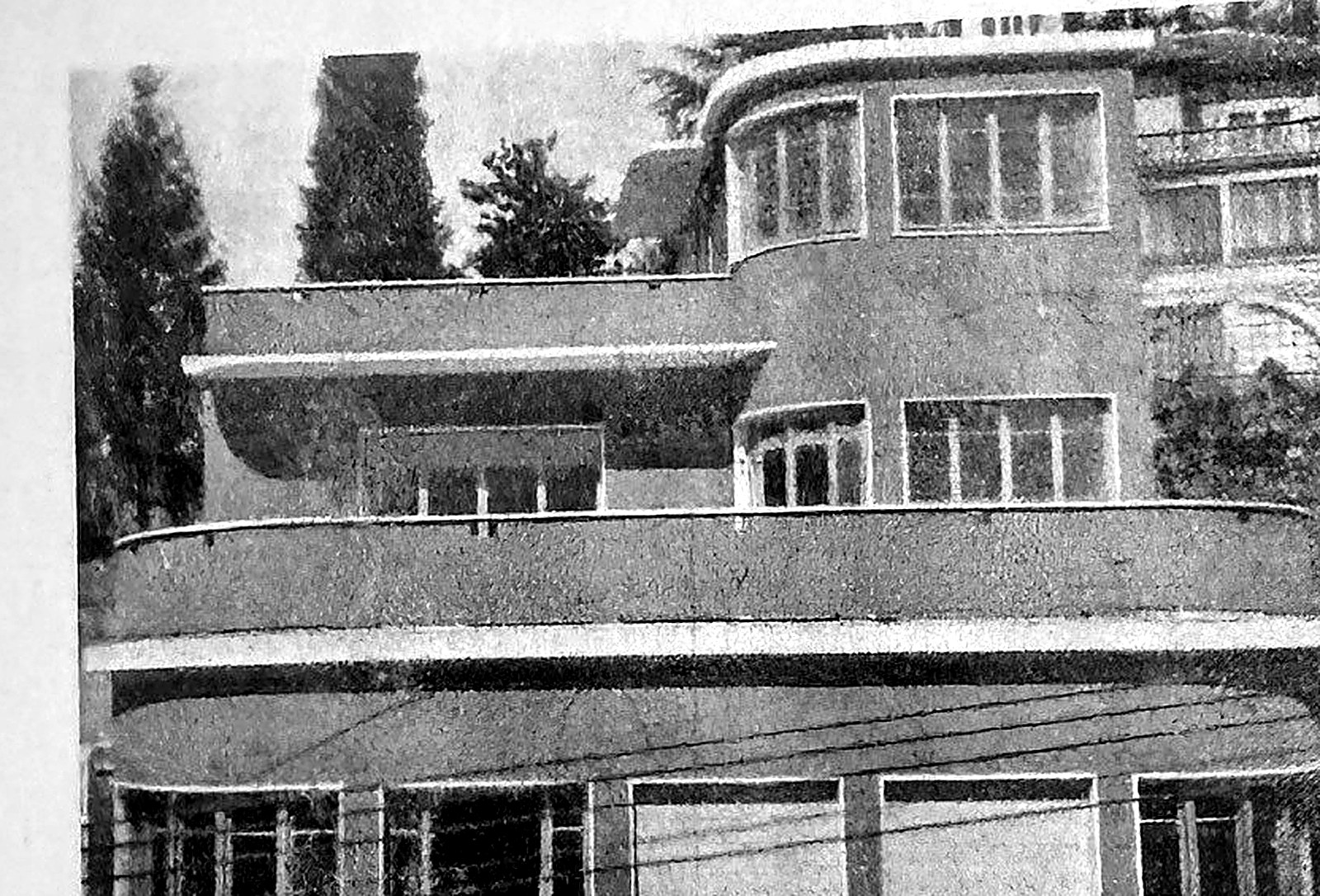
Fig. — La Casa del Popolo di Venegono Superiore (Monterosso), progettata da Kurt Caesar e inaugurata il 1° maggio 1949: un edificio su pilastri inclinati, come la tolda di una nave issata sulla collina. Il segno di Caesar sul paese che, mezzo secolo dopo, avrebbe accolto anche Tiziano Sclavi.Fig. — The People's House of Venegono Superiore (Monterosso), designed by Kurt Caesar and inaugurated on 1 May 1949: a building on slanted stilts, like a ship's deck hoisted onto the hill. Caesar's mark on the town that, half a century later, would also welcome Tiziano Sclavi.Abb. — Das Volkshaus von Venegono Superiore (Monterosso), von Kurt Caesar entworfen und am 1. Mai 1949 eingeweiht: ein Bau auf schrägen Pfeilern, wie das Deck eines auf den Hügel gehievten Schiffs. Caesars Zeichen auf dem Ort, der ein halbes Jahrhundert später auch Tiziano Sclavi aufnehmen sollte.
Dylan Dog n. 79 · La Fata del Male (Sergio Bonelli Editore, aprile 1993). Copertina di Angelo Stano.La tavola d'apertura — Dylan Dog tra la folla di mostri, di Angelo Stano (omaggio al Quarto Stato di Pellizza) — reca una dedica autografa di Tiziano Sclavi «A Emanuele», firmata di suo pugno per il curatore. Un piccolo cortocircuito junghiano: il creatore di Dylan Dog, che vive a Venegono come già vi visse Caesar, firma qui il suo personaggio.The opening plate — Dylan Dog amid the crowd of monsters, by Angelo Stano (an homage to Pellizza's Fourth Estate) — bears an autograph dedication by Tiziano Sclavi «A Emanuele», signed by his own hand for the curator. A small Jungian short-circuit: the creator of Dylan Dog, who lives in Venegono as Caesar once did, signs his own character here.Die Auftakttafel — Dylan Dog inmitten der Monsterschar, von Angelo Stano (eine Hommage an Pellizzas Vierten Stand) — trägt eine handschriftliche Widmung von Tiziano Sclavi «A Emanuele», eigenhändig für den Kurator signiert. Ein kleiner Jung'scher Kurzschluss: der Schöpfer von Dylan Dog, der in Venegono lebt wie einst Caesar, signiert hier seine eigene Figur.
Consultare il Fondo SclaviConsulting the Fondo SclaviDen Fondo Sclavi einsehen
Lu·Ma·Gi 9–13 / 14–18 · Me 9–13 / 15–19 · Ve·Sa 9–13 (verificare variazioni)(check for changes)(Änderungen vorbehalten)
AccessoAccessZugang
Fondo speciale · si consulta su richiesta in bibliotecaSpecial collection · consulted on request at the librarySpezialbestand · auf Anfrage in der Bibliothek einsehbar
Dalle tavole a colori del Vittorioso e dei razzi di Jack Away al carboncino del deserto africano. Clicca su qualsiasi immagine per aprirla a piena risoluzione.From the colour plates of Il Vittorioso and the rockets of Jack Away to the charcoal of the African desert. Click any image to open it at full resolution.Von den Farbtafeln des Vittorioso und den Raketen von Jack Away bis zur Kohle der afrikanischen Wüste. Klicken Sie auf ein beliebiges Bild, um es in voller Auflösung zu öffnen.
Tavola a colori
Il batiscafo «Trieste»
The bathyscaphe «Trieste»
Der Bathyscaph «Trieste»
Tavola a colori
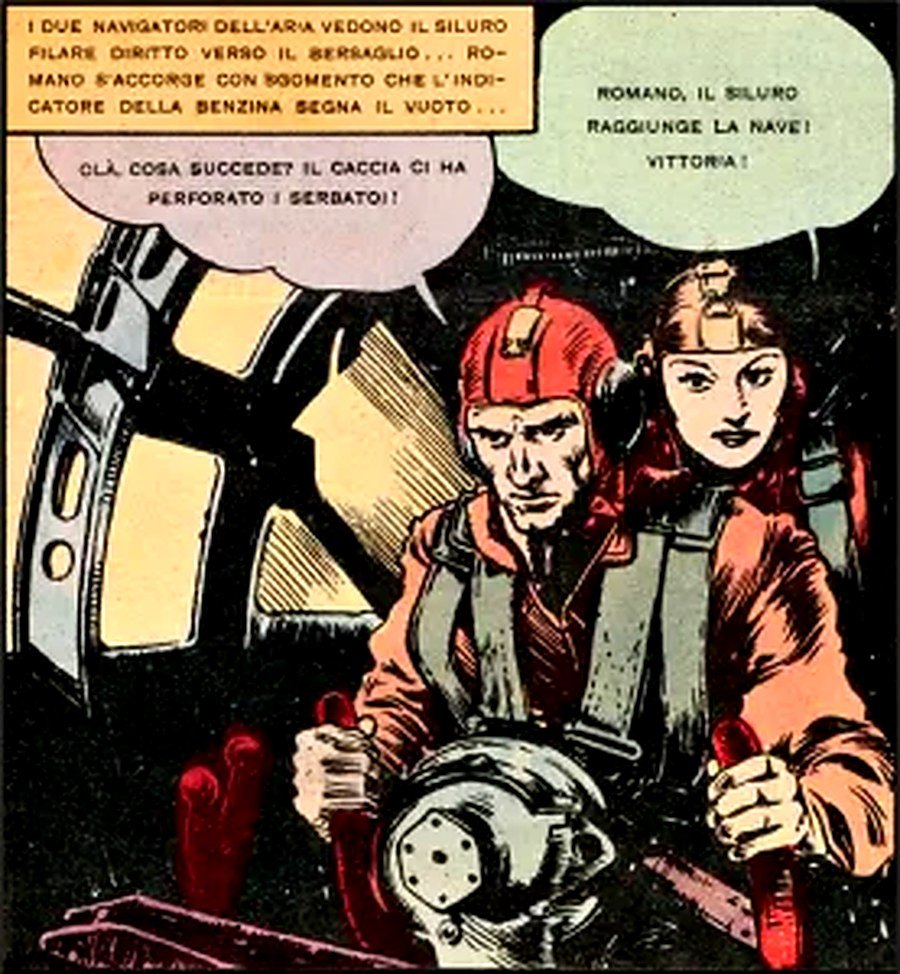
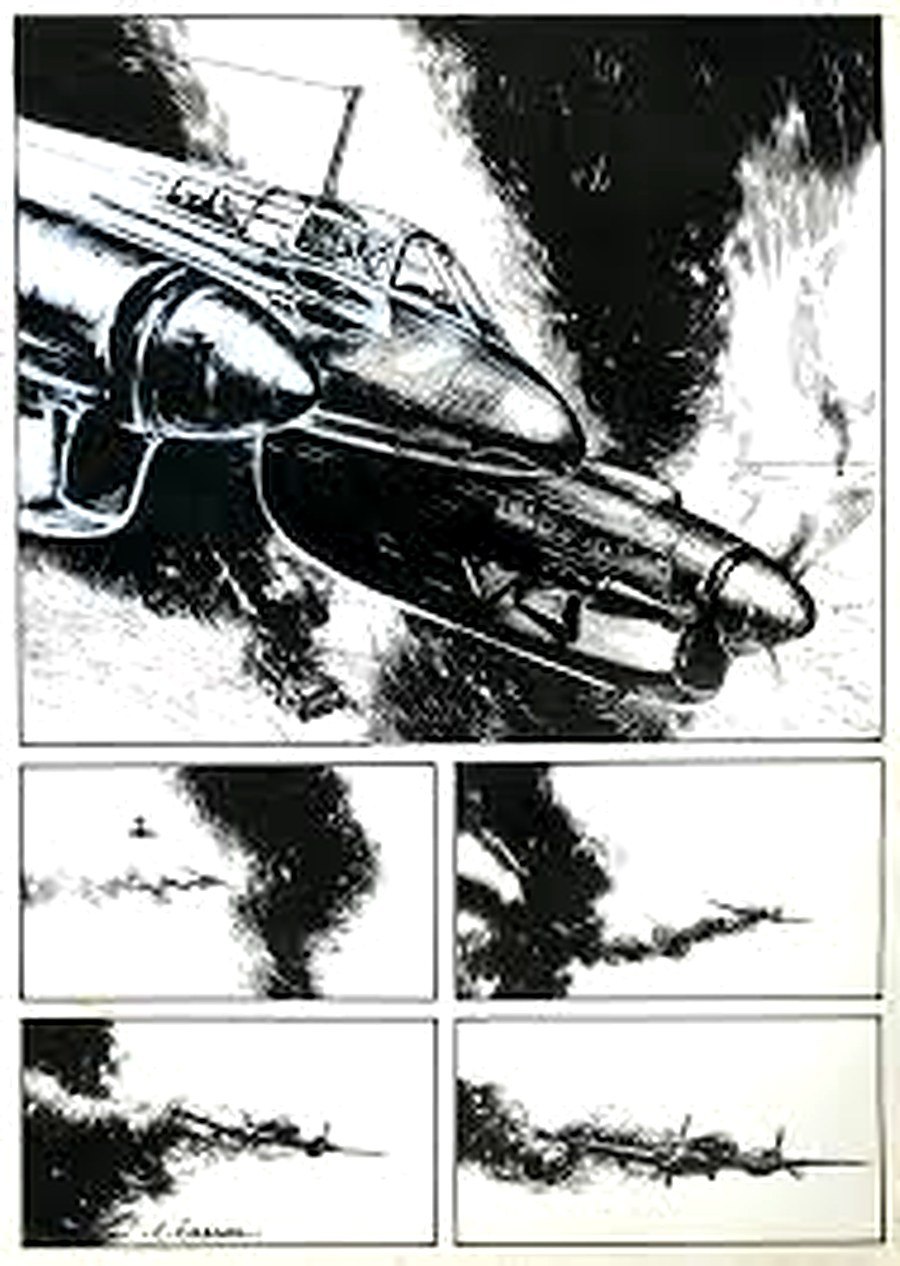
Duello aereo · Romano
Aerial duel · Romano
Luftkampf · Romano
Il Vittorioso · 1952
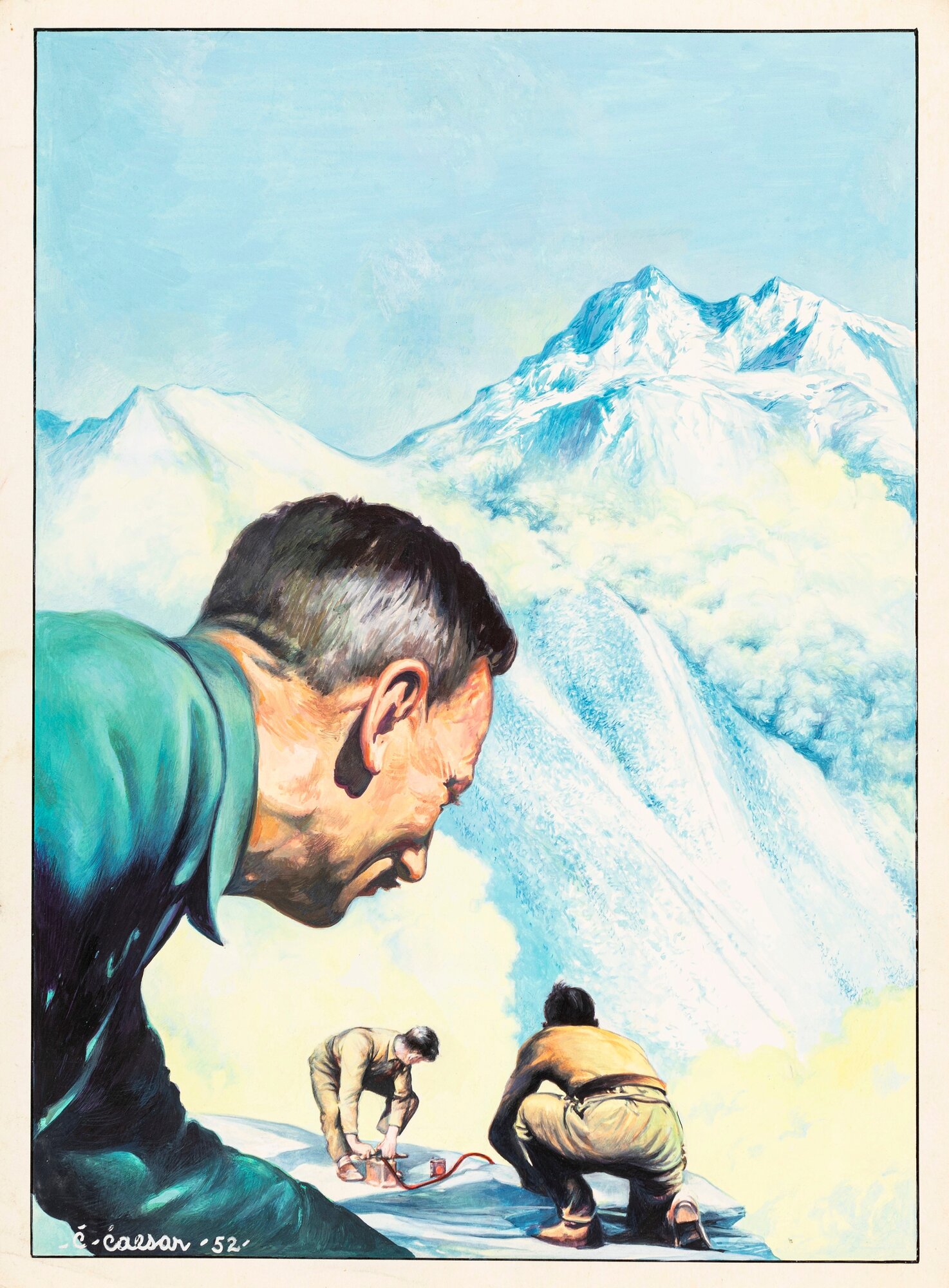
Alpinisti e valanga
Climbers and avalanche
Bergsteiger und Lawine
Il Vittorioso · 1952
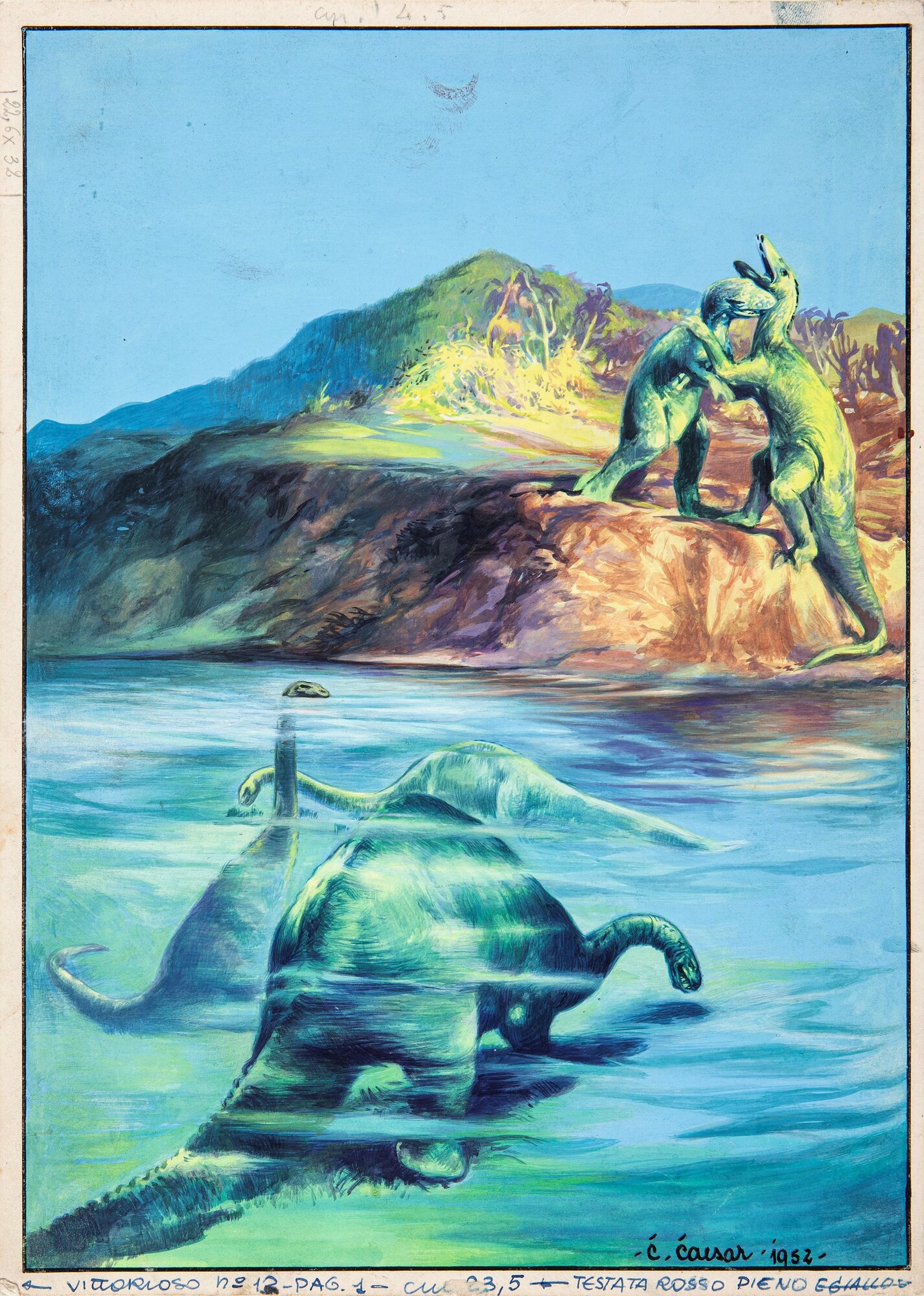
Dinosauri
Dinosaurs
Dinosaurier
Tavola a colori
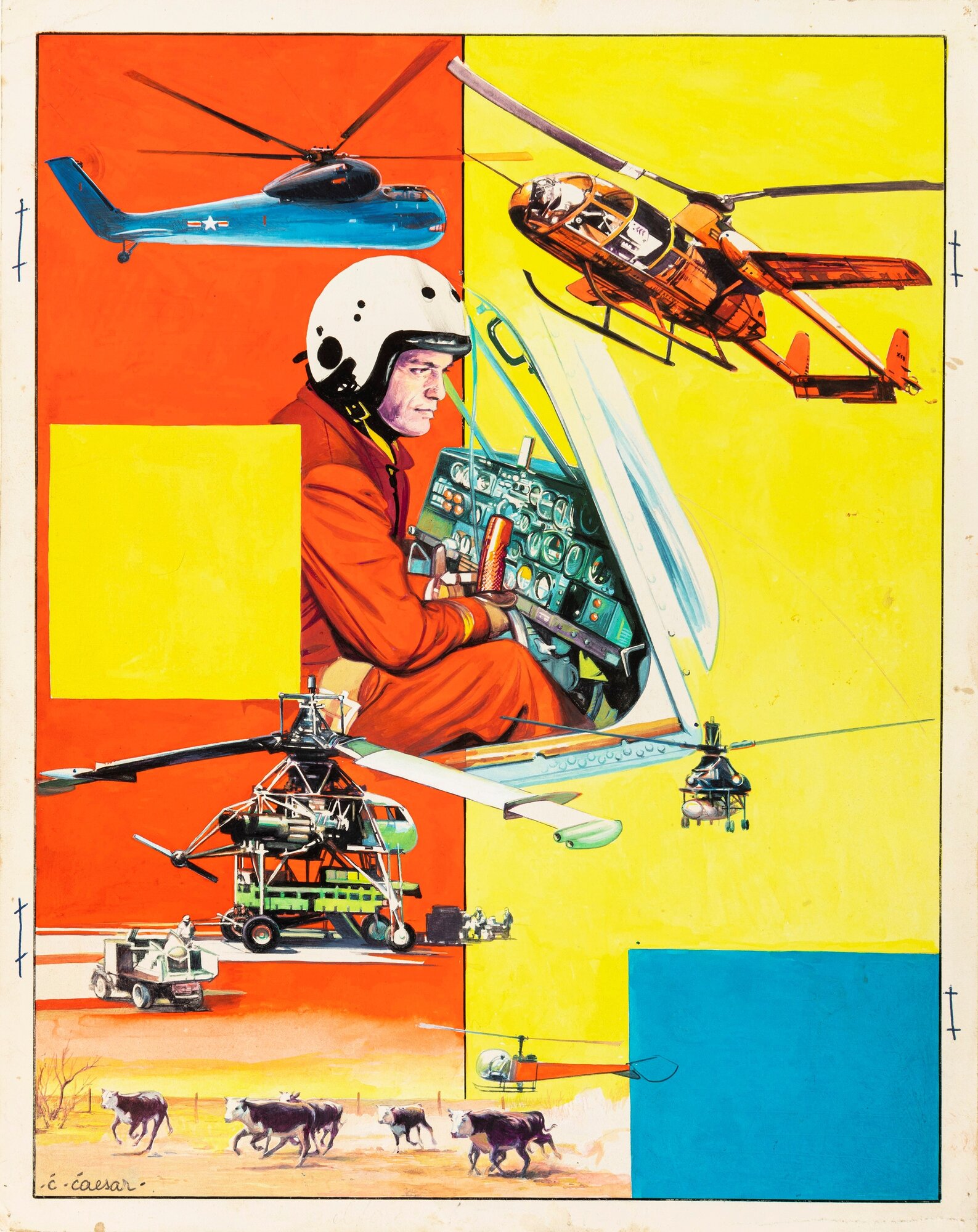
Storia dell'elicottero
History of the helicopter
Geschichte des Hubschraubers
Il Vittorioso · 1951
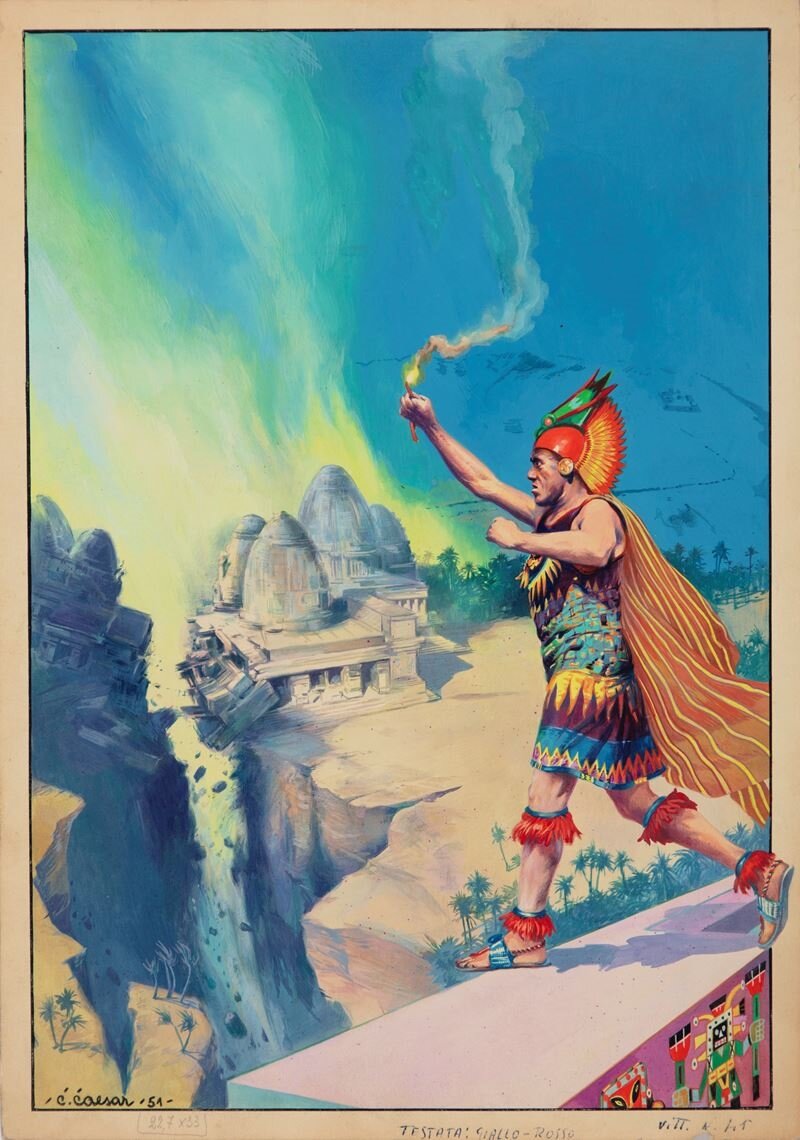
La torcia sul tempio
The torch above the temple
Die Fackel über dem Tempel
Il Vittorioso
Palombaro e sommergibile
Diver and submarine
Taucher und U-Boot
Jack Away · 1950
«Here Speaks Mars»
«Here Speaks Mars»
«Here Speaks Mars»
Il Vittorioso · 1953
Copertina · 8 nov. 1953
Cover · 8 Nov 1953
Titelblatt · 8. Nov. 1953
Jack Away
Alla radio, nella notte
At the radio, by night
Am Funkgerät, nachts
China · Il Vittorioso
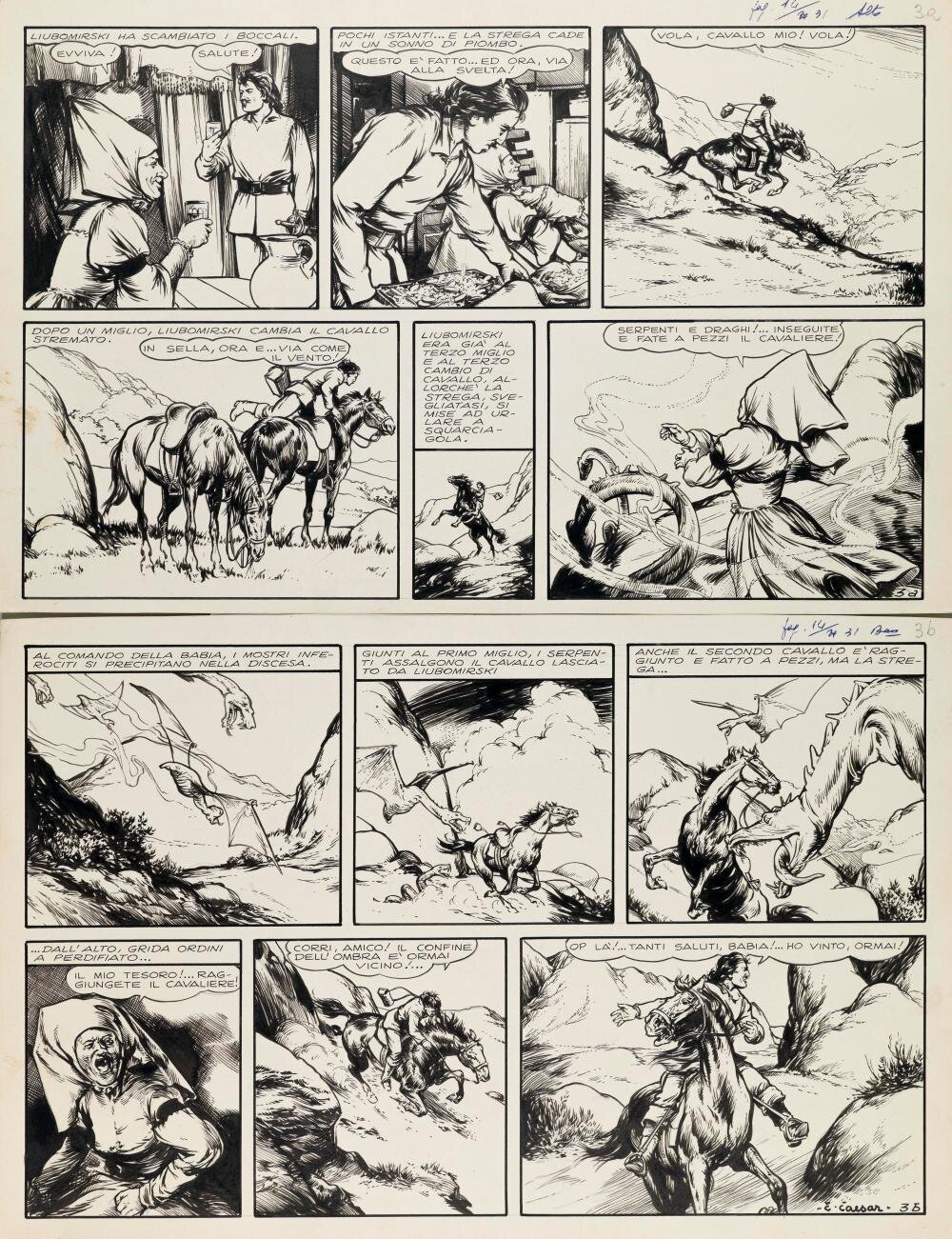
Liubomirski · china
Liubomirski · ink
Liubomirski · Tusche
Cine-romanzo · Caesar
«Il Legionario»
«Il Legionario»
«Il Legionario»
Omaggio · 2024
Vitt & Dintorni · 2024
Vitt & Dintorni · 2024
Vitt & Dintorni · 2024
Afrikakorps · 1943
Frontespizio · Carl Röhrig Verlag
Title page · Carl Röhrig Verlag
Titelseite · Carl Röhrig Verlag
Fotografia · 1942
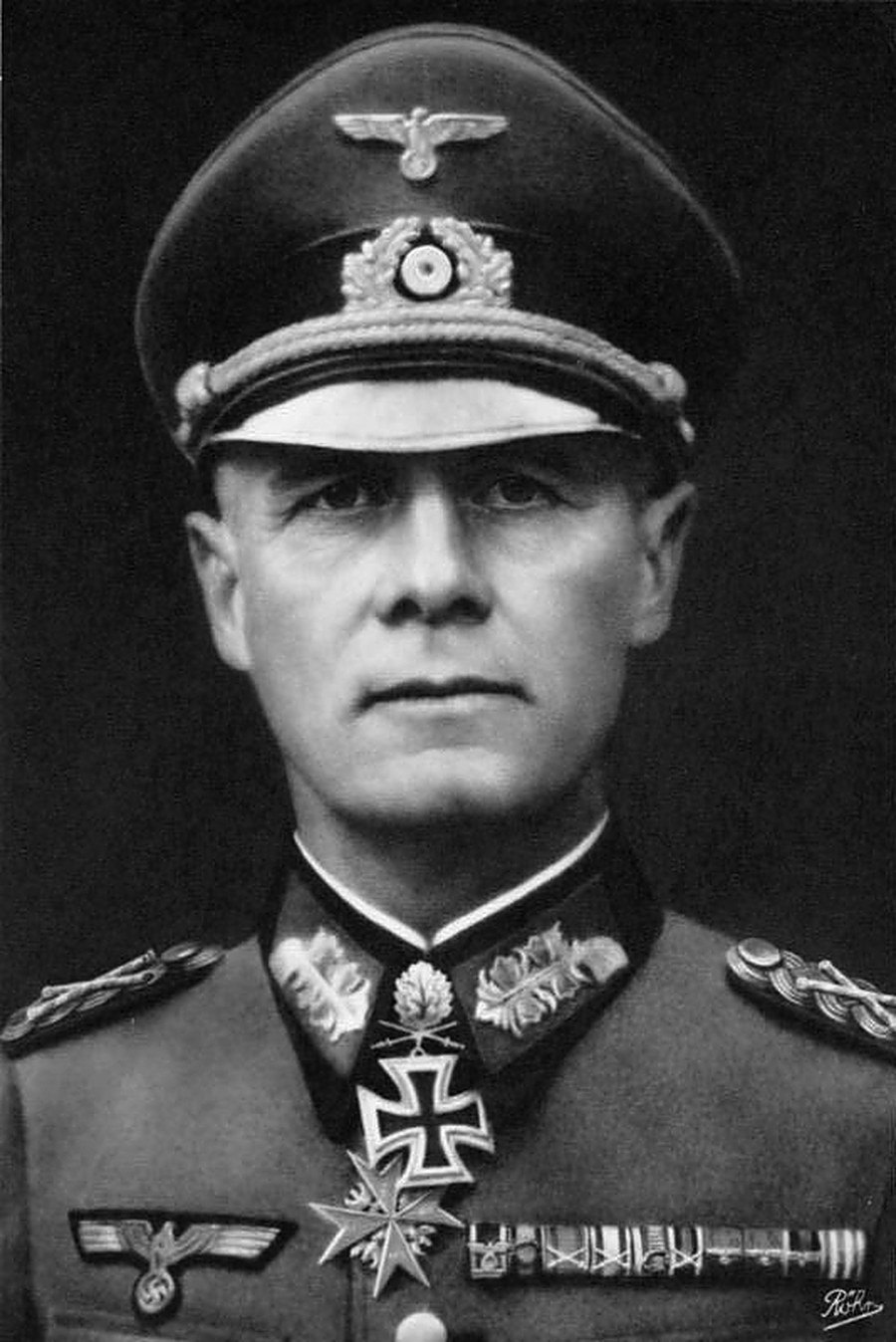
Rommel · fotografia ufficiale
Rommel · official photograph
Rommel · offizielles Foto
Afrikakorps · 1943
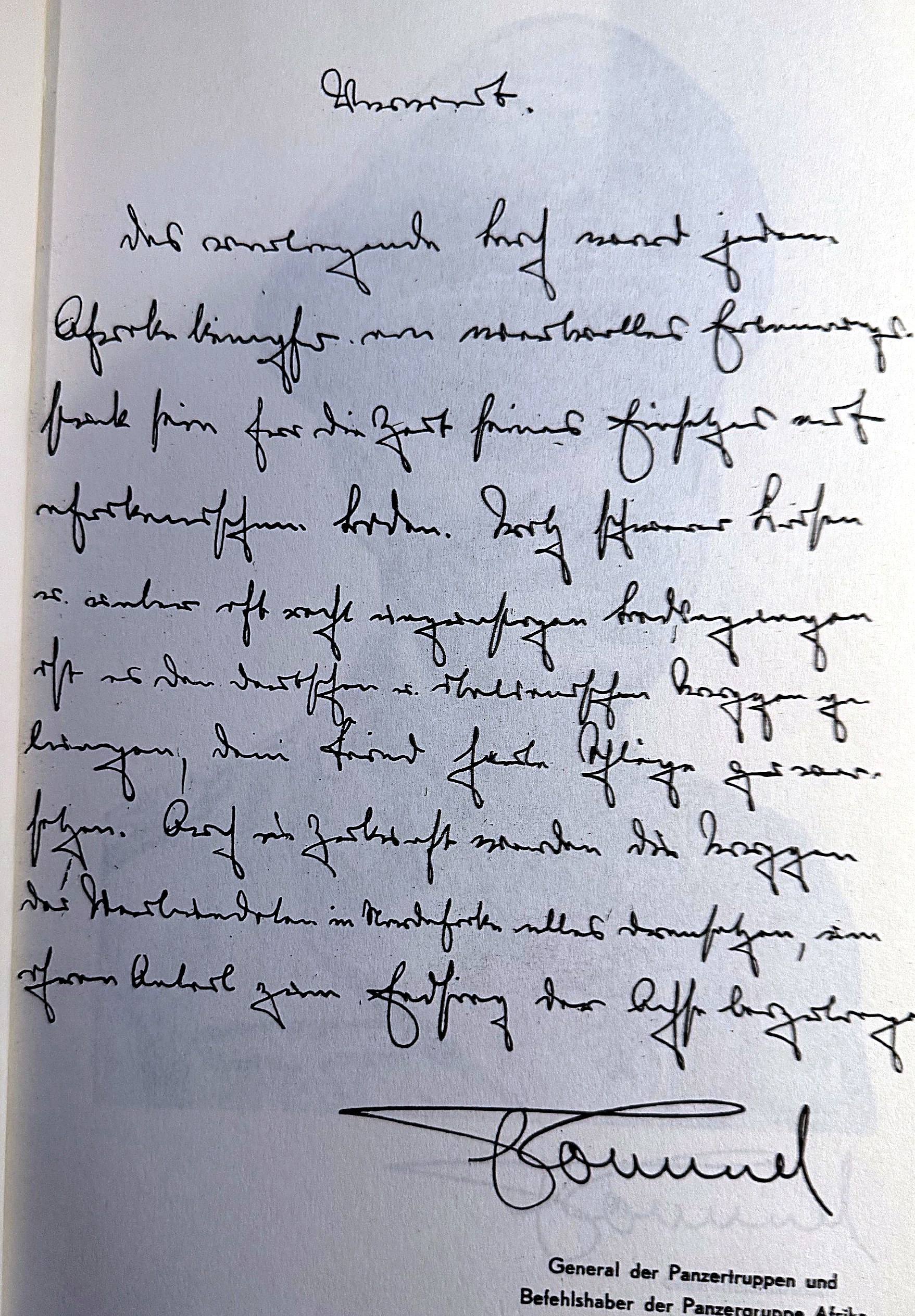
Prefazione autografa di Rommel
Rommel's handwritten preface
Rommels handschriftliches Vorwort
Afrikakorps
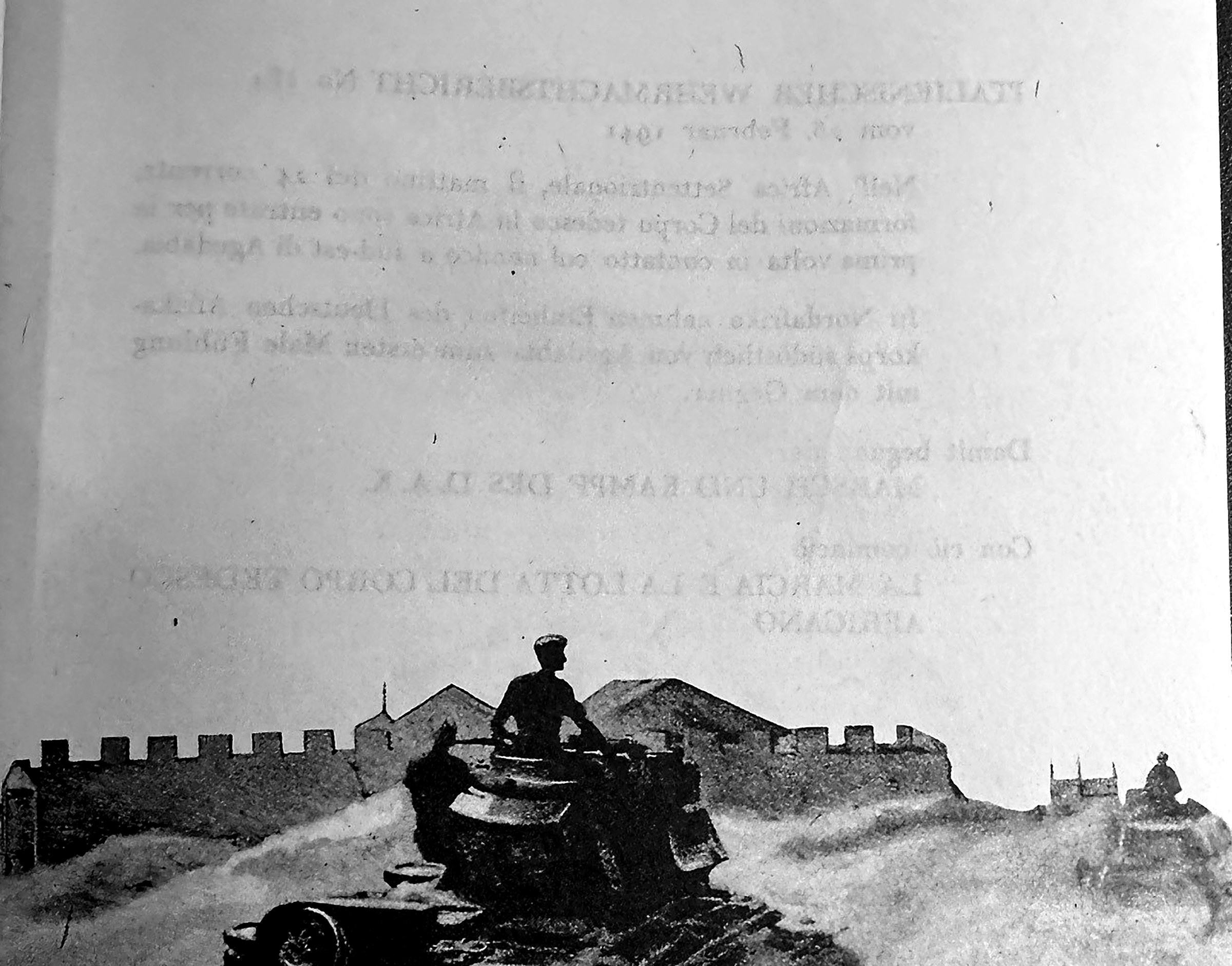
Panzer a El Agheila
Panzer at El Agheila
Panzer bei El Agheila
Afrikakorps
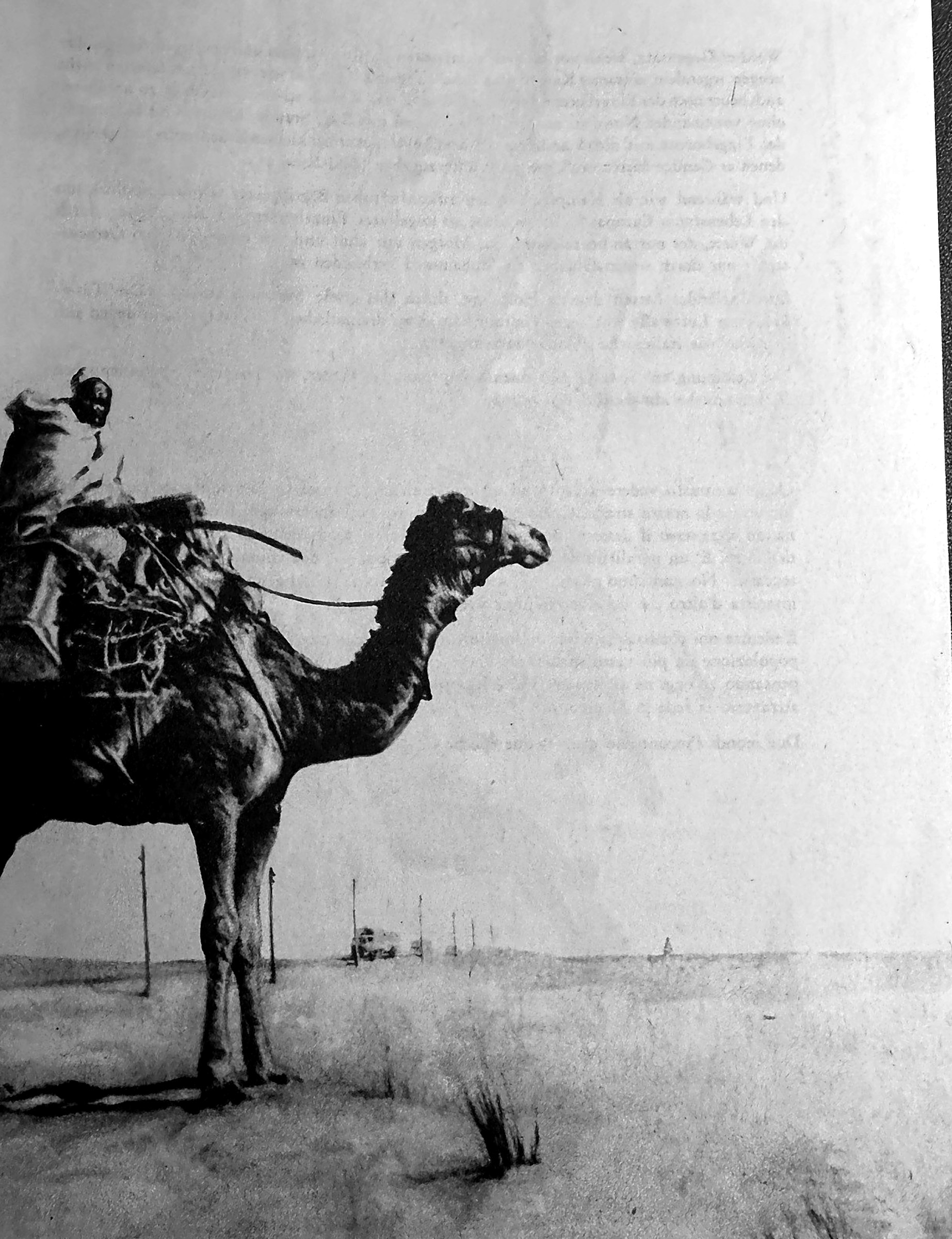
Cammelliere presso Sirte
Camel rider near Sirte
Kamelreiter bei Sirte
K. Caesar · 1942
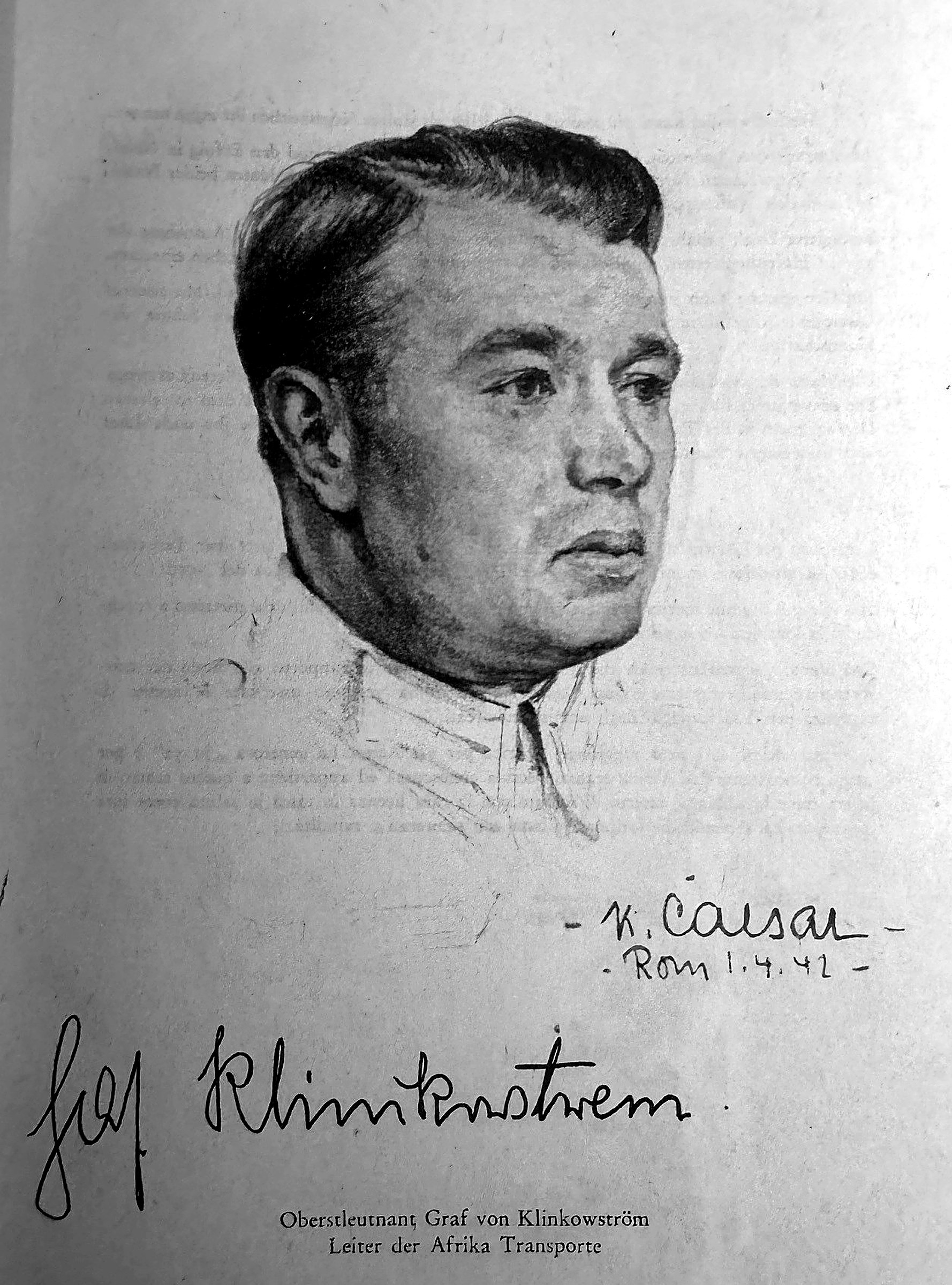
Graf von Klinkowström
Graf von Klinkowström
Graf von Klinkowström
Afrikakorps
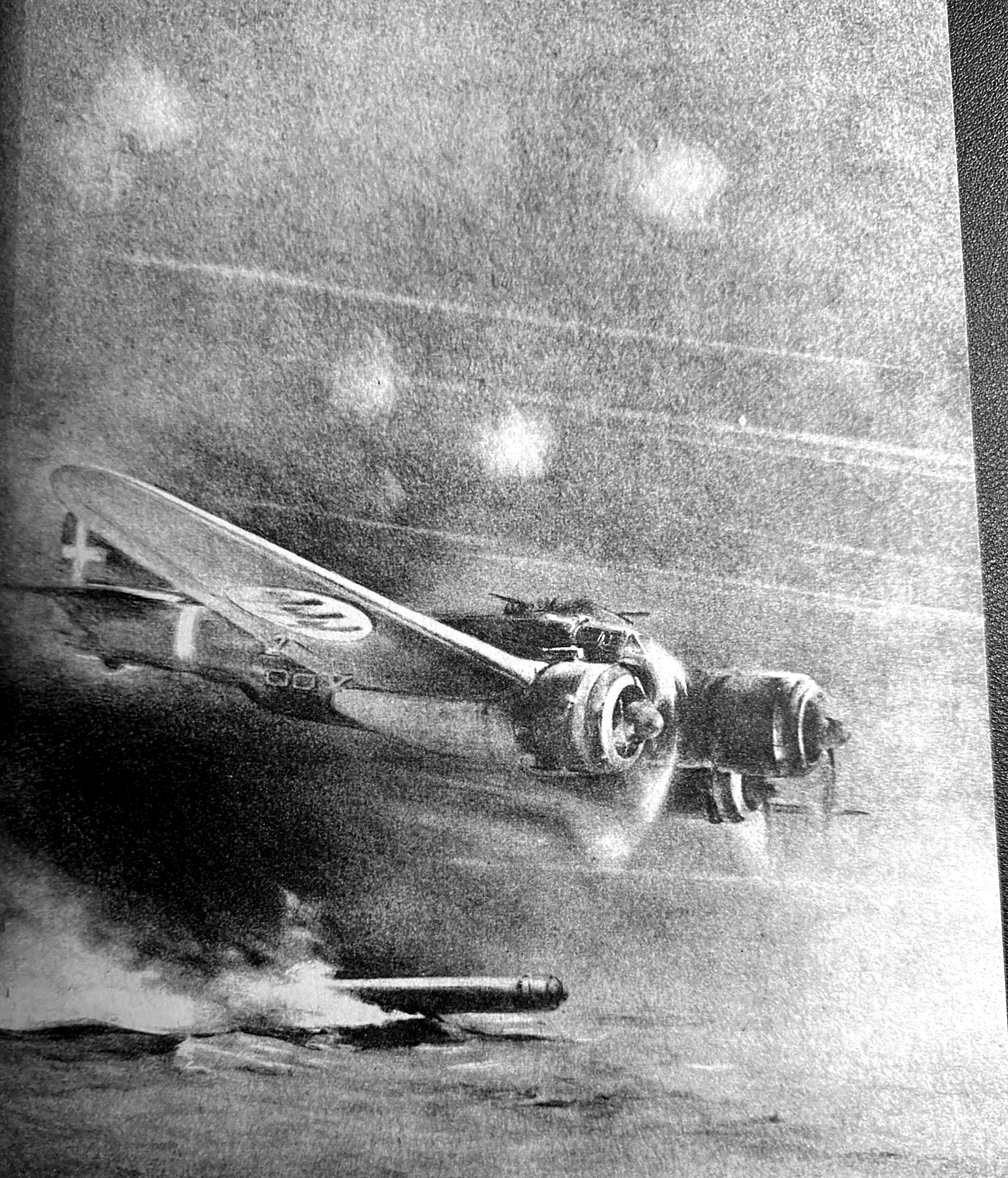
Aerosilurante Savoia
Savoia torpedo bomber
Savoia-Torpedobomber
Afrikakorps
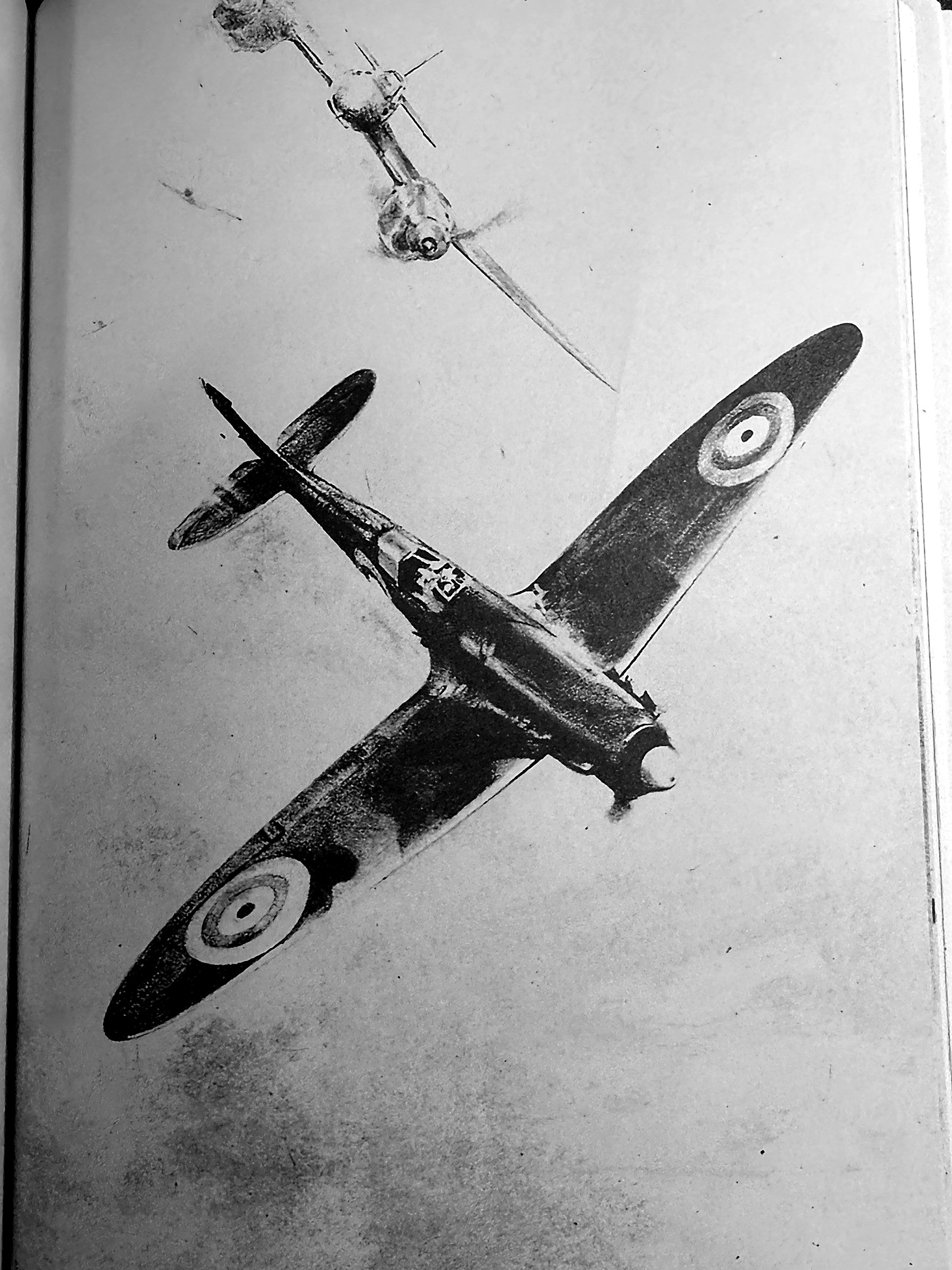
FW contro Spitfire
FW versus Spitfire
FW gegen Spitfire
Afrikakorps
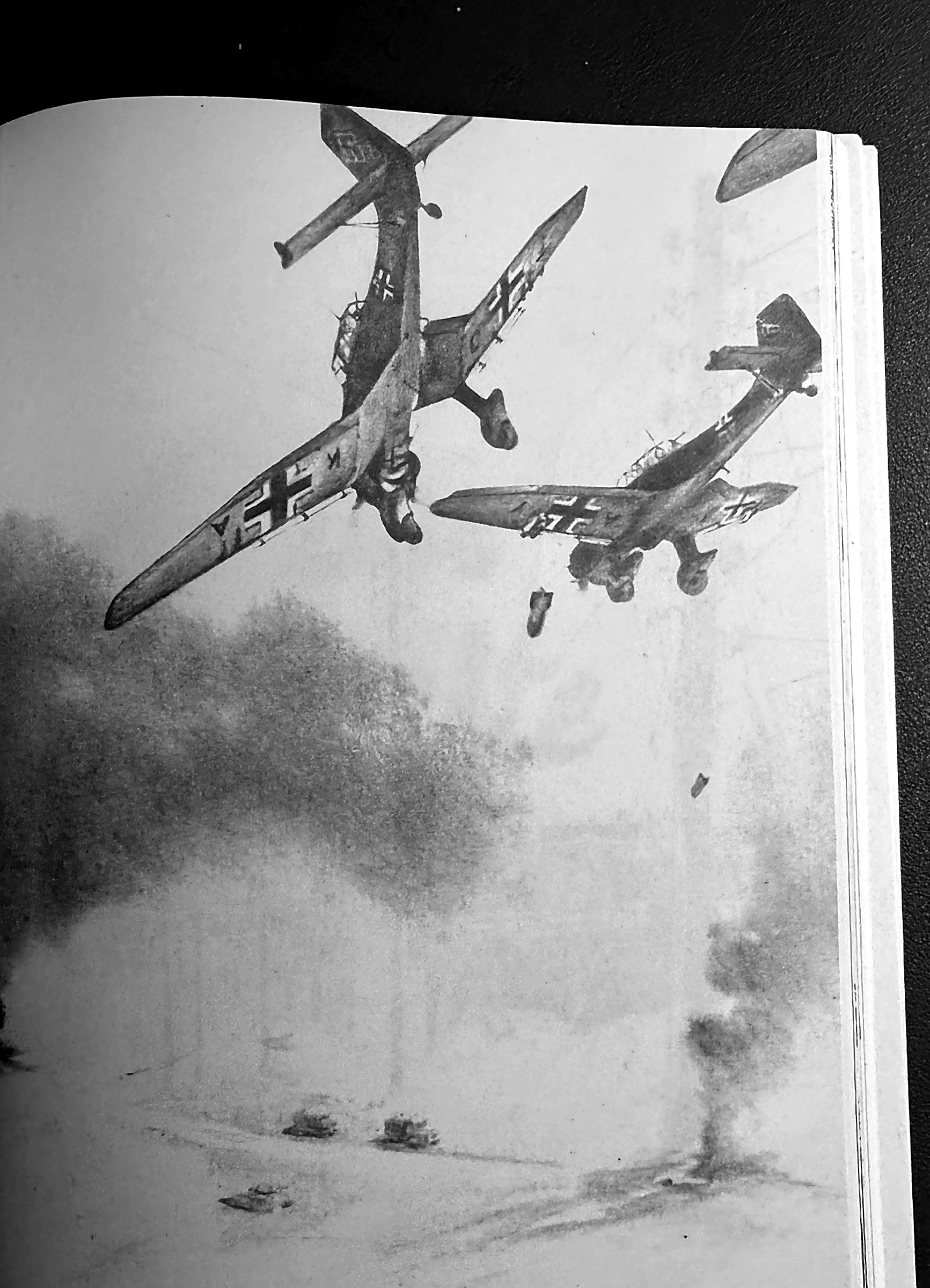
Stukas all'attacco
Stukas attacking
Stukas im Angriff
Afrikakorps
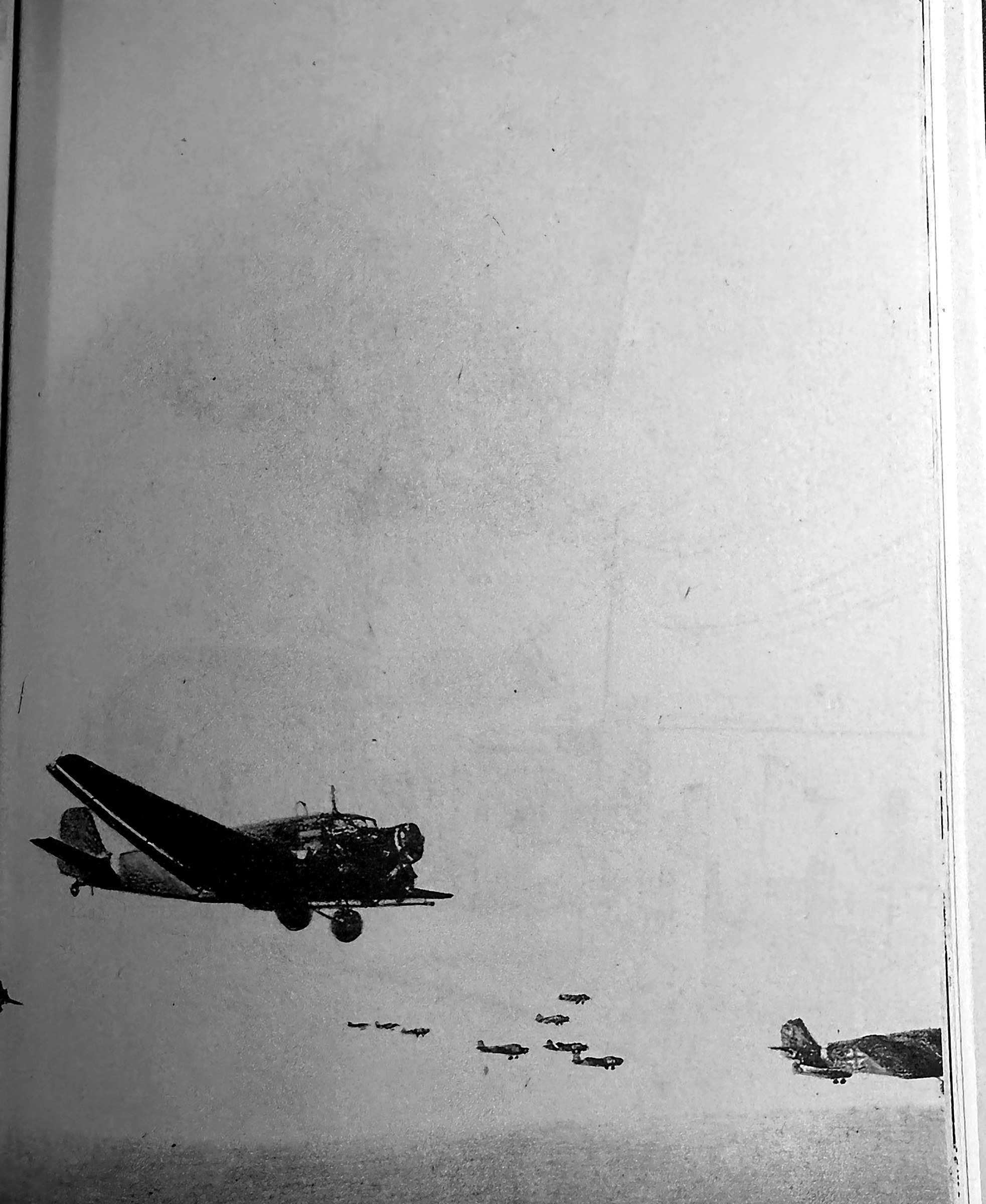
Trasporti Ju 52
Ju 52 transports
Transporter Ju 52
Afrikakorps
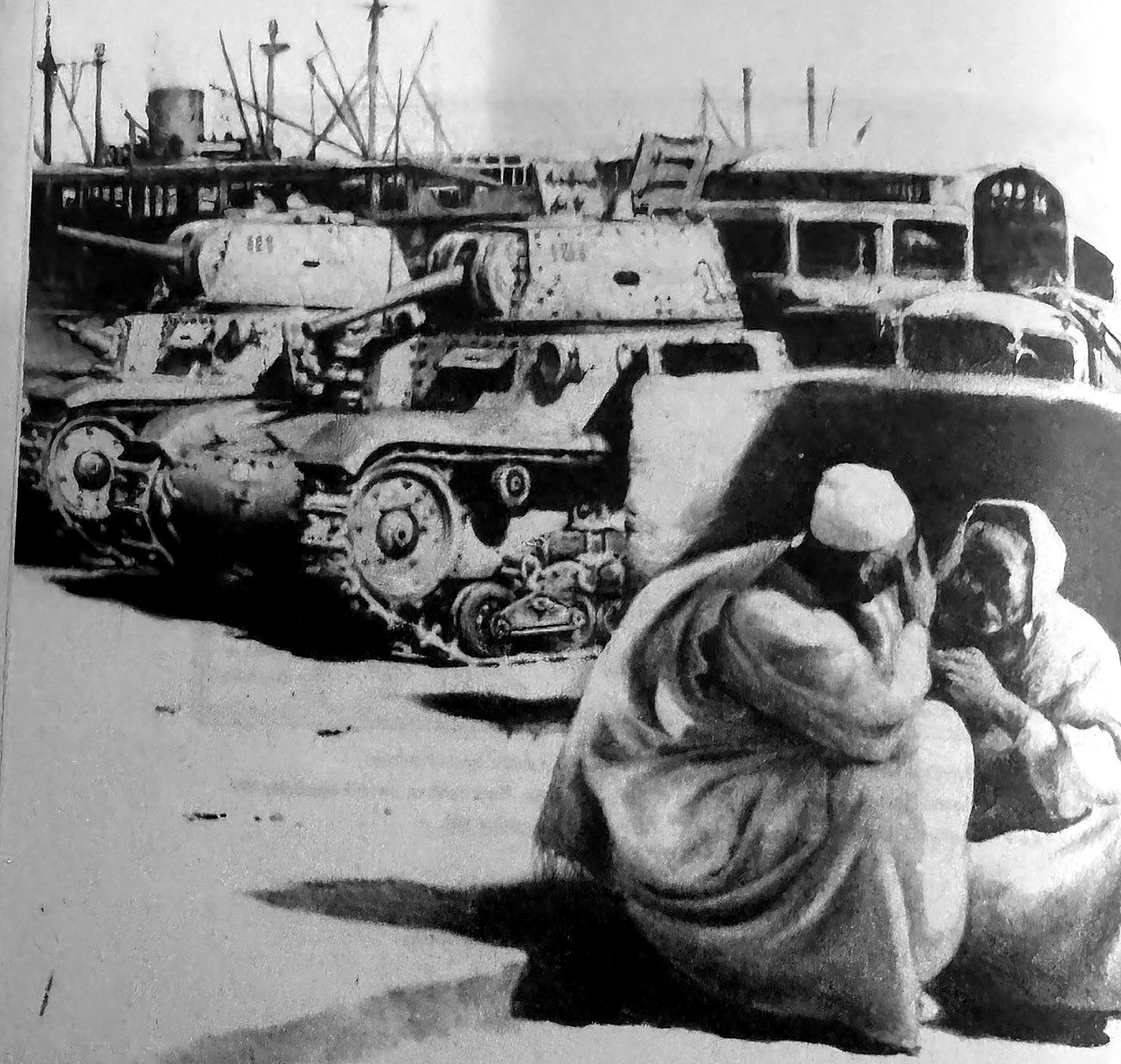
Carri nel porto di Tripoli
Tanks in Tripoli harbour
Panzer im Hafen von Tripolis
K. Ćaesar · colore
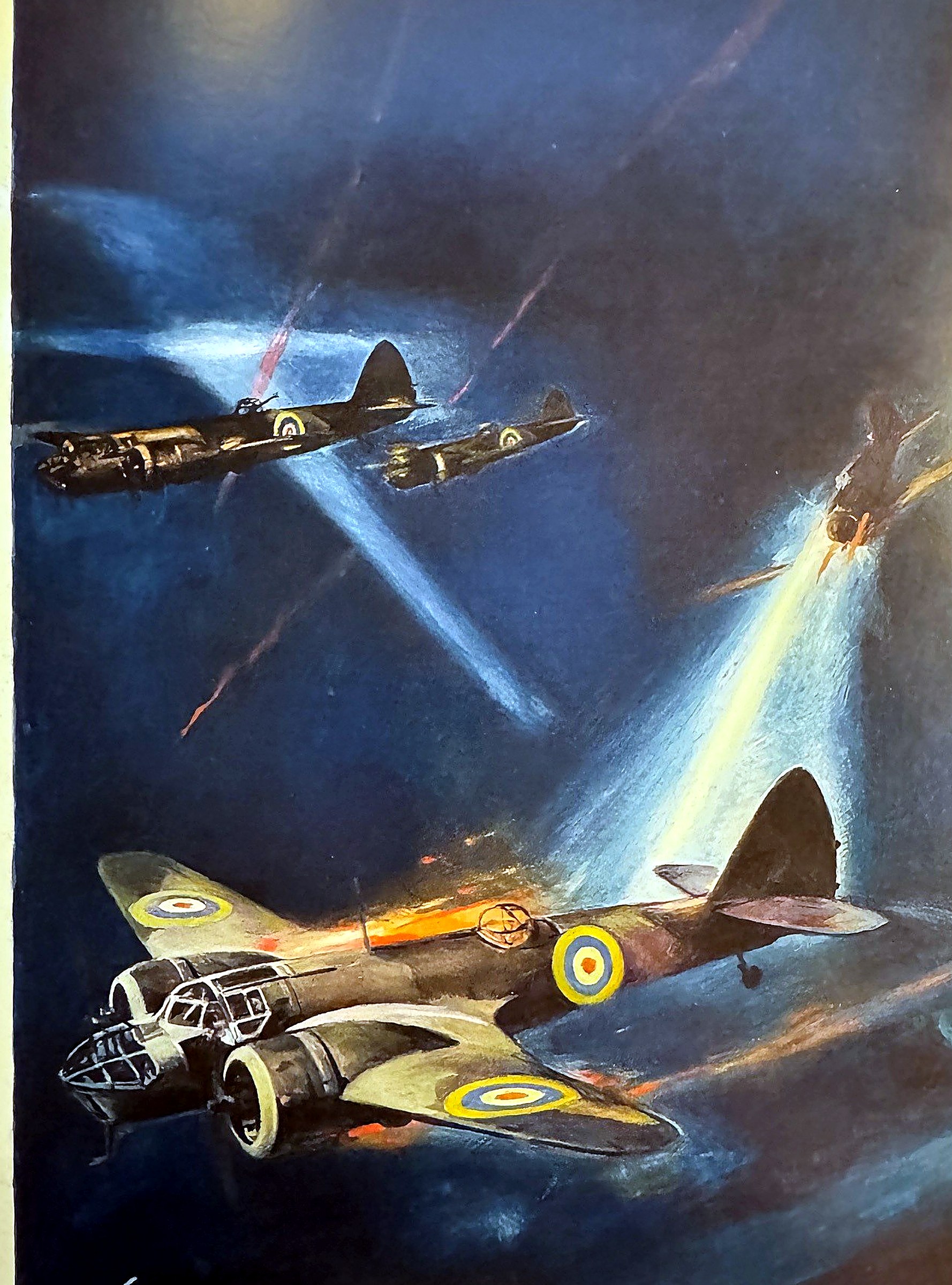
Caccia notturni · tavola a colori
Night fighters · colour plate
Nachtjäger · Farbtafel
Afrikakorps
«Dove possiamo battere l'Inghilterra…»
"Where we can beat England…"
„Wo wir England schlagen können…“
Afrikakorps
Schizzo di collegamento
Linking sketch
Verbindende Skizze
Ristampa · 2007
Copertina ristampa Ma.Ro
Ma.Ro reprint cover
Umschlag Nachdruck Ma.Ro
Venegono · 1949
Casa del Popolo · Venegono
People's House · Venegono
Volkshaus · Venegono
VII
§ VII
Il CuratoreThe CuratorDer Kurator
Chi conduce la ricerca su Kurt Caesar.Who leads the research on Kurt Caesar.Wer die Forschung über Kurt Caesar leitet.
Curatore del dossier · ricercatoreDossier curator · researcherKurator des Dossiers · Forscher
Laureato in Giurisprudenza con indirizzo Economico-Aziendale, ha successivamente conseguito un MBA presso il MIP School of Management del Politecnico di Milano nel 2005 e un percorso di specializzazione in Corporate Governance presso lo IASSP.
Professionista con una consolidata esperienza nel settore dell'Executive Search e della consulenza manageriale, ricopre attualmente il ruolo di Associate Partner presso Key2people Executive Search S.r.l., dove è responsabile della Practice Retail & FMCG e segue progetti di ricerca e selezione di top management sia a livello nazionale sia internazionale.
Nel corso della propria carriera ha maturato una significativa esperienza nell'affiancamento di imprese, gruppi industriali e fondi di investimento, supportando processi di crescita, sviluppo organizzativo, riorganizzazione e valorizzazione del capitale manageriale. Attualmente svolge incarichi di Advisor per Oltre Venture, ToSeed & Partners, Milano Capital e Arventia, contribuendo a iniziative di sviluppo strategico e creazione di valore.
Da sempre appassionato di storia, affianca all'attività professionale un forte interesse per la divulgazione e l'approfondimento storico-culturale. È inoltre membro del Direttivo Nazionale della FIAP — Federazione Italiana Associazioni Partigiane.
La sua attività professionale si caratterizza per una profonda conoscenza dei settori Retail, FMCG e Agroalimentare, nonché per una consolidata capacità di individuare, valutare e sviluppare leadership in contesti imprenditoriali, manageriali e partecipate.
A law graduate with a focus on Business & Economics, he went on to earn an MBA at MIP — Politecnico di Milano School of Management (2005) and a specialisation in Corporate Governance at IASSP.
A seasoned professional in Executive Search and management consulting, he is currently Associate Partner at Key2people Executive Search S.r.l., where he heads the Retail & FMCG Practice and leads top-management search projects both nationally and internationally.
Over his career he has built significant experience advising companies, industrial groups and investment funds, supporting growth, organisational development, restructuring and the enhancement of managerial capital. He currently serves as Advisor to Oltre Venture, ToSeed & Partners, Milano Capital and Arventia.
A lifelong history enthusiast, he pairs his professional work with a strong commitment to historical research and outreach. He is also a member of the National Board of FIAP — Federazione Italiana Associazioni Partigiane.
His work is distinguished by deep knowledge of the Retail, FMCG and Agri-food sectors and a proven ability to identify, assess and develop leadership across entrepreneurial, managerial and portfolio-company contexts.
Absolvent der Rechtswissenschaften mit wirtschaftlich-betriebswirtschaftlicher Ausrichtung, erwarb anschließend einen MBA am MIP — School of Management des Politecnico di Milano (2005) sowie eine Spezialisierung in Corporate Governance am IASSP.
Als erfahrener Fachmann im Bereich Executive Search und Managementberatung ist er derzeit Associate Partner bei Key2people Executive Search S.r.l., wo er die Practice Retail & FMCG leitet und Projekte zur Suche und Auswahl von Top-Management auf nationaler wie internationaler Ebene betreut.
Im Laufe seiner Karriere hat er umfangreiche Erfahrung in der Begleitung von Unternehmen, Industriegruppen und Investmentfonds gesammelt und Prozesse des Wachstums, der Organisationsentwicklung, der Umstrukturierung und der Aufwertung des Managementkapitals unterstützt. Derzeit ist er als Advisor für Oltre Venture, ToSeed & Partners, Milano Capital und Arventia tätig.
Seit jeher geschichtsbegeistert, verbindet er seine berufliche Tätigkeit mit einem starken Engagement für historische Forschung und Vermittlung. Er ist zudem Mitglied des Nationalvorstands der FIAP — Federazione Italiana Associazioni Partigiane.
Seine Arbeit zeichnet sich durch fundierte Kenntnisse der Bereiche Retail, FMCG und Agrar-/Lebensmittelwirtschaft aus sowie durch die bewährte Fähigkeit, Führungskräfte in unternehmerischen, Management- und Beteiligungskontexten zu erkennen, zu bewerten und zu entwickeln.
Arterigere-Chiarotto · Varese · 2003 ISBN 9788889666579 · pp. 111–118
Fonte primaria
Primary source
Primärquelle
Daniela Franchetti
La guerra di Kurt Caesar
in Tracce · Ed. Lativa · Varese n. 2 · marzo 1996 · pp. 27–36
Manoscritto · fonte primaria
Manuscript · primary source
Manuskript · Primärquelle
Fortunato Faleti (cav.)
Kurt Caesar, uomo di mente e di azione
Venegono Superiore · 24 gennaio 1994 Memoria dattiloscritta · coll. Antonio GuidaTypescript memoir · Antonio Guida coll.Maschinenschriftl. Memoiren · Slg. Antonio Guida
Periodico locale
Local periodical
Lokalzeitschrift
«Un tedesco amico dei partigiani»
L'Informatore comunale di Venegono Sup.
aprile 1994
Saggio
Essay
Essay
Pier Costante Righini
Un maestro del fumetto. Kurt Caesar
in I Quaderni del fumetto · Serie Caesar n. 3 · giugno 1973
Cronologia
Chronology
Chronologie
Cronologia di Caesar
in Informa Vitt
n. 15 · marzo 1995 Coautore Antonio GuidaCo-author Antonio GuidaMitautor Antonio Guida
Monografia
Monograph
Monografie
Pacienti & Traini
I comics italiani d'avventura durante il fascismo
Comic Art · Roma · 1986 · p. 78
Monografia
Monograph
Monografie
Francesco Manetti
Fumetto e Acciaio · Nuvole di tempesta
Autopubblicato (Amazon KDP) · 2021 Introd. di Moreno Burattini · Caesar protagonista della terza parteIntro. by Moreno Burattini · Caesar features in the third partEinl. von Moreno Burattini · Caesar im dritten Teil
Monografia
Monograph
Monografie
De Turris & Zucconi (cur.)
Romano il Legionario
Ritter / NovAntico · 2004 ISBN 978-88-89107-01-0 · 216 pp.
Antifascismo e Resistenza in provincia di Varese — I protagonisti
Pietro Macchione Editore · Varese · 2017 2 voll. · ISBN 9788865703649 Documenta gli antifascisti di Venegono e la famiglia MauceriDocuments the Venegono antifascists and the Mauceri familyDokumentiert die Antifaschisten von Venegono und die Familie Mauceri
Schede biografiche
Biographical records
Biografische Einträge
ANPI
Donne e Uomini della Resistenza
Schede di Gianfranco Mauceri «Brambillino» e del padre MatteoRecords of Gianfranco Mauceri «Brambillino» and his father MatteoEinträge zu Gianfranco Mauceri „Brambillino“ und seinem Vater Matteo anpi.it
Fondo archivistico
Archival fonds
Archivbestand
Casa della Resistenza
Centro di documentazione · Fondotoce (Verbania)
Archivio fotografico · Brigata «Cesare Battisti», battaglione Monte ZedaPhotographic archive · «Cesare Battisti» Brigade, Monte Zeda battalionFotoarchiv · Brigade „Cesare Battisti“, Bataillon Monte Zeda casadellaresistenza.it
Memoria · fonte primaria
Memoir · primary source
Memoiren · Primärquelle
Mario Manzoni
Partigiani nel Verbano
Vangelista · Milano · 1975 · 189 pp. Memoria della Brigata «Cesare Battisti», la formazione di Gianfranco MauceriMemoir of the «Cesare Battisti» Brigade, Gianfranco Mauceri's formationMemoiren der Brigade «Cesare Battisti», der Formation Gianfranco Mauceris
Volume tedesco
German volume
Deutscher Band
Kurt Caesar
Marsch und Kampf des d. Afrikakorps · Bd. I
Carl Röhrig Verlag · München · 1943 214 pp. · Reprint Mittler & Sohn 1994 · Ma.Ro 2007
Archivio storico
Archive
Archiv
Casa del Popolo di Venegono Sup.
scrl · REA 41220 VA
Lombardia Beni Culturali / SAN fond. 1945 · sede via Alpini · 1° mag. 1949
Fondo · in corso
Archive · ongoing
Bestand · laufend
Bundesarchiv-Militärarchiv
Freiburg im Breisgau
Bestand RH 19-VIII · PK Afrika Personalakte Kurt Kaiser · PERS 6/8
Fondo · in corso
Archive · ongoing
Bestand · laufend
The National Archives · Kew
POW / Coltano 1945
WO 392 (POW lists) · WO 204
Atto di nascita
Birth record
Geburtsurkunde
Archives dép. de la Moselle
Montigny-lès-Metz · 30.03.1908
Saint-Julien-lès-Metz
Fondo regionale
Regional fond
Regionalbestand
Commissione Reg. Lombardia
Qualifiche Partigiane
Archivio Comune di Varese pr. 22 VA · 31.05.1948
Mostra
Exhibition
Ausstellung
"Nell'infinito e oltre"
Kurt Caesar
WOW Spazio Fumetto · Milano 26.10 — 1.12.2024 · Fond. Fossati
Documenti scaricabili per studiosi, ricercatori, appassionati.Downloadable documents for scholars, researchers, enthusiasts.Herunterladbare Dokumente für Wissenschaftler, Forscher und Interessierte.
Hai informazioni, documenti o ricordi familiari su Kurt Caesar?Do you have information, documents or family memories about Kurt Caesar?Haben Sie Informationen, Dokumente oder Familienerinnerungen zu Kurt Caesar?
Grazie. Il tuo messaggio è stato inviato: ogni segnalazione è preziosa e verrà letta con attenzione.Thank you. Your message has been sent: every lead is precious and will be read with care.Danke. Ihre Nachricht wurde gesendet: jeder Hinweis ist wertvoll und wird sorgfältig gelesen.
La ricerca prosegue. Chiunque possieda materiali iconografici, lettere, testimonianze, contatti con eredi o archivi inediti è invitato a scrivere. Puoi allegare immagini o documenti direttamente dal modulo.
Research continues. Anyone with iconographic materials, letters, testimonies, contacts with heirs or unpublished archives is invited to write. You can attach images or documents directly from the form.
Die Forschung geht weiter. Wer über Bildmaterial, Briefe, Zeugnisse, Kontakte zu Erben oder unveröffentlichte Archive verfügt, ist eingeladen zu schreiben. Bilder oder Dokumente können direkt über das Formular angehängt werden.
Le ricerche d'archivio presso il Bundesarchiv (Berlino, Friburgo), The National Archives di Kew, l'ISREC Lombardia e gli Archives départementales de la Moselle sono tuttora in corso. Allegati ammessi: JPG, PNG, PDF — fino a circa 10 MB complessivi.Archival research at the Bundesarchiv (Berlin, Freiburg), The National Archives at Kew, ISREC Lombardia and the Archives départementales de la Moselle is currently underway. Allowed attachments: JPG, PNG, PDF — up to about 10 MB total.Die Archivrecherchen im Bundesarchiv (Berlin, Freiburg), in The National Archives in Kew, im ISREC Lombardia und in den Archives départementales de la Moselle dauern an. Zulässige Anhänge: JPG, PNG, PDF — bis ca. 10 MB insgesamt.
Con il contributo dellaWith the contribution ofMit Unterstützung vonFIAP — Federazione Italiana Associazioni Partigiane
Titolare del trattamento: Emanuele Nicora — emanuele.nicora@gmail.com.
Cookie e tracciamento: questo sito non utilizza cookie di profilazione, non installa cookie di tracciamento e non impiega strumenti di analisi statistica. I caratteri tipografici sono ospitati direttamente sul server del sito: durante la navigazione non vengono effettuate chiamate verso servizi di terze parti. Per questo non è presente alcun banner di consenso ai cookie.
Dati trattati e finalità: i soli dati personali trattati sono quelli che inserisci volontariamente nel modulo di contatto (nome e cognome, email, oggetto, messaggio ed eventuali allegati), utilizzati per rispondere alla tua richiesta e per gestire le segnalazioni relative alla ricerca su Kurt Caesar. Base giuridica: il tuo consenso (art. 6.1.a GDPR) e il riscontro alla tua richiesta.
Destinatari e trasferimenti: l'invio del modulo avviene tramite il servizio FormSubmit (formsubmit.co), che recapita il messaggio via email e opera come fornitore del servizio; ciò può comportare un trasferimento dei dati verso gli Stati Uniti. Non viene effettuata alcuna diffusione dei dati.
Conservazione: i dati sono conservati per il tempo necessario a gestire la richiesta e gli eventuali sviluppi della ricerca, e successivamente cancellati.
Diritti dell'interessato: puoi esercitare in qualsiasi momento i diritti di accesso, rettifica, cancellazione, limitazione, opposizione e portabilità scrivendo a emanuele.nicora@gmail.com. Hai inoltre diritto di proporre reclamo al Garante per la protezione dei dati personali (www.garanteprivacy.it).
Data controller: Emanuele Nicora — emanuele.nicora@gmail.com.
Cookies and tracking: this site uses no profiling cookies, installs no tracking cookies and employs no analytics tools. The typefaces are hosted directly on the site's server: no third-party calls are made while browsing. For this reason there is no cookie-consent banner.
Data processed and purposes: the only personal data processed are those you voluntarily enter in the contact form (full name, email, subject, message and any attachments), used to reply to you and to manage reports related to the Kurt Caesar research. Legal basis: your consent (art. 6(1)(a) GDPR) and the handling of your request.
Recipients and transfers: the form is sent through the FormSubmit service (formsubmit.co), which delivers the message by email and acts as service provider; this may entail a transfer of data to the United States. No data dissemination takes place.
Retention: data are kept only as long as needed to handle your request and any developments of the research, then deleted.
Your rights: you may exercise at any time the rights of access, rectification, erasure, restriction, objection and portability by writing to emanuele.nicora@gmail.com. You also have the right to lodge a complaint with the Italian Data Protection Authority (Garante, www.garanteprivacy.it).
Cookies und Tracking: Diese Website verwendet keine Profiling-Cookies, installiert keine Tracking-Cookies und setzt keine Analysetools ein. Die Schriftarten werden direkt auf dem Server der Website gehostet: Beim Surfen erfolgen keine Aufrufe an Dritte. Daher gibt es kein Cookie-Einwilligungsbanner.
Verarbeitete Daten und Zwecke: Verarbeitet werden ausschließlich die Daten, die Sie freiwillig im Kontaktformular eingeben (Vor- und Nachname, E-Mail, Betreff, Nachricht und etwaige Anhänge), um Ihnen zu antworten und Hinweise zur Forschung über Kurt Caesar zu verwalten. Rechtsgrundlage: Ihre Einwilligung (Art. 6 Abs. 1 lit. a DSGVO) und die Bearbeitung Ihrer Anfrage.
Empfänger und Übermittlungen: Der Versand erfolgt über den Dienst FormSubmit (formsubmit.co), der die Nachricht per E-Mail zustellt und als Dienstanbieter fungiert; dies kann eine Datenübermittlung in die USA umfassen. Eine Verbreitung der Daten findet nicht statt.
Speicherdauer: Die Daten werden nur so lange gespeichert, wie es zur Bearbeitung Ihrer Anfrage und etwaiger Entwicklungen der Forschung erforderlich ist, und anschließend gelöscht.
Ihre Rechte: Sie können jederzeit Ihre Rechte auf Auskunft, Berichtigung, Löschung, Einschränkung, Widerspruch und Übertragbarkeit unter emanuele.nicora@gmail.com ausüben. Außerdem haben Sie das Recht, Beschwerde bei der italienischen Datenschutzbehörde (Garante, www.garanteprivacy.it) einzulegen.